Since the Farm Bill of 2018 changed the definition and regulatory status of hemp from an agricultural perspective, confusion and misinformation has been rife on the U.S. Food and Drug Administration (FDA) regulatory status of hemp and its products—including cannabidiol (CBD), a non-psychoactive cannabinoid.  Despite there not being a clear basis for concluding that CBD has an appropriate FDA regulatory status for use in food, CBD has gained mass popularity, and it is not uncommon to see CBD sold in chocolate, oils, and even pet treats in your local stores.  In this article we have summarized the current status of CBD in food and dietary supplements and the hurdles that lie in the path of supporting a suitable FDA status for such uses.

Impact of 2018 Farm Bill

When Congress passed the 2018 Farm Bill (formally known as the Agriculture Improvement Act of 2018), there was widespread misunderstanding that the law legalized substances derived from the Cannabis sativa L. plant, including CBD, for use in food and dietary supplements.  In fact, the relevant provisions of the Farm Bill merely removed hemp from the Controlled Substances Act definition of marijuana.  The 2018 Farm Bill defined “hemp” as Cannabis sativa L. with less than 0.3% tetrahydrocannabinol (THC, a psychoactive component of cannabis) on a dry weight basis[1] and affected the Drug Enforcement Administration’s authority over hemp farming.  The change granted more authority to states to regulate the growth, production, and distribution of hemp products.

The 2018 Farm Bill had no effect on FDA’s authority to regulate CBD or other hemp products; it also did not change the regulatory definitions of “food additive” and “dietary ingredient” to facilitate the use of ingredients like CBD in food and dietary supplements.[2]  FDA continues to have authority to regulate products containing cannabis and cannabis-derived compounds, including those classified as hemp.[3]  Therefore, CBD is subject to the same regulatory requirements under the Federal Food, Drug, and Cosmetic Act (FFDCA) as other food additives and new dietary ingredients.

Current FDA Position on CBD

FDA has consistently taken the position that it is unlawful to sell a food or dietary supplement containing CBD in interstate commerce because CBD is not eligible for use in those products under the FFDCA, as CBD had been studied for possible “drug” uses before it was marketed in foods or dietary supplements.  These clinical studies led to FDA’s 2018 approval of Epidiolex, which contains a purified form of CBD, as a drug for use in the treatment of seizures associated with Lennox-Gastaut syndrome (LGS) or Dravet syndrome.  Pursuant to Section 301(ll) of the FFDCA, FDA is taking the position that it is unlawful to market foods that contain an added “drug” that has been approved by FDA or “for which substantial clinical investigations have been instituted and for which the existence of such investigations has been made public.”   (While there are exceptions for substances that were in foods before they were approved or studied as drugs, such as caffeine or baking soda, FDA has determined that CBD does not fall under such exceptions.[4])  Likewise, FDA has cited Section 201(ff)(3)(B)(i) of the FFDCA, which explicitly excludes approved drugs or those substances that are the subject of publicly-disclosed clinical studies, from the definition of “dietary ingredients,” as being the basis for CBD not being permitted for use in dietary supplements.  Thus, FDA’s current position is that marketing foods or supplements containing CBD violates the FFDCA and, because of this, that such products are adulterated.

That said, FDA thus far has taken enforcement action only against foods and supplements containing CBD when such products make drug claims concerning the prevention, diagnosis, mitigation, treatment, or cure of disease.  Specifically, FDA has sent warning letters to a number of companies making claims that CBD can treat conditions such as cancer, Alzheimer’s disease, opioid withdrawal, pain, pet anxiety, arthritis, and other conditions.[5]

In early March 2020, FDA released a Congressionally requested report[6] on the agency’s progress toward developing a regulatory framework to allow CBD in conventional foods and dietary supplements.  To the frustration of many, however, it appears that little actual progress has been made.  The most significant revelation from the report is that FDA is considering developing a risk-based enforcement policy that could clarify FDA’s enforcement priorities.  Given the widespread availability of such products, however, an informal policy of enforcement discretion has essentially been in place for some time.

Congress Tries to Intervene

FDA has received considerable pressure from Congress, particularly members like Senate Majority Leader Mitch McConnell of Kentucky whose states have invested in hemp agriculture,[7] to permit CBD to be legally sold in foods and supplements.  In September 2019, bipartisan Congress members sent a letter to FDA urging the Agency to provide legal clarity and establish a regulatory pathway for food products containing hemp-derived CBD.[8]  They expressed concern with FDA’s estimate that rulemaking on this topic could take between 3 to 5 years and asked for more expeditious measures, like announcing a policy of enforcement discretion and using an interim rule to establish a regulatory framework.  Several bills have been introduced to create a legislative fix for this issue.  One proposed solution, outlined in a H.R. 5587 introduced by Representative Collin Peterson of Minnesota, would amend Section 201(ff)(3)(B)(i) of the FFDCA (discussed above) to exempt “cannabidiol or a hemp-derived cannabidiol containing substance” from the prohibition on marketing approved drugs as dietary supplements.

Lack of Safety Data

As of yet, there have been no proposed Congressional fixes that address the second hurdle to an appropriate FDA status for CBD:  the definitions of “food additive,” “new dietary ingredient,” and related definitions of adulteration in the FFDCA.  These aspects of the law require FDA to evaluate CBD based on a robust safety data set and do not provide FDA with the authority to authorize CBD for use in food and dietary supplements in the absence of such information.

“Food additive” is defined under Section 201(s) of the FFDCA as substances that are intended, or may reasonably be expected to result, directly or indirectly, in its becoming a component or otherwise affecting the characteristics of any food.  While food additives require FDA premarket clearance so as not to be found to adulterate food, there is an exemption from the definition of “food additive” for substances that are “generally recognized as safe” (GRAS) for their intended use.  GRAS status can be supported by either common use in food prior to 1958 (which is not relevant to CBD) or general recognition of safety through scientific procedures—generally requiring the availability of published safety studies in peer-reviewed journals.  Similarly, supplements containing new dietary ingredients are considered adulterated unless they contain only ingredients “present in the food supply as an article used for food in a form in which the food has not been chemically altered” or if, 75 days before marketing, the company submits to FDA evidence to show the dietary ingredient “will reasonably be expected to be safe” for human consumption under labeled conditions of use.  In any case (i.e., to obtain premarket clearance or to support a GRAS position), there must be a robust data set supporting the safety of CBD for use in food.  While FDA has had no questions concerning the use of hulled hemp seeds, hemp seed protein, and hemp seed oil as ingredients for use in human food based on existing safety data,[9] to FDA’s knowledge, there are not adequate safety data for CBD.[10]

Setting aside the lack of safety data, FDA is aware of potentially adverse safety data regarding CBD.  FDA has noted that taking CBD may increase or decrease the effects of other medications, as well as the risk of liver injury (a side effect observed in its review of Epidiolex).[11]  Studies performed on laboratory animals found potential male reproductive toxicity concerns (e.g., a decrease in testicular size, inhibition of sperm development, and decreased testosterone).[12]  Any safety data developed to support CBD’s safety would also need to adequately address these adverse data to satisfy FDA’s requirements for the safety of food additives and new dietary ingredients.

The current regulatory framework under the FFDCA does not allow FDA to affirmatively evaluate the safety of CBD for use in foods and supplements, nor does FDA have funding to sponsor the necessary studies to support the safety of CBD.  Rather, FDA is waiting for the necessary safety data to be developed to evaluate CBD’s safety.  While FDA held a public hearing on cannabis in May 2019 and opened a public docket to gather comments and data for FDA review (through which the Agency received approximately 4,500 comments), FDA has yet to receive the necessary safety information to allow it to agree that CBD has a suitable status for use in food and dietary supplements.[13]

What about the States?

For the foreseeable future, it does not appear that CBD will have a suitable FDA status for use in food and supplements, and cannabis containing more than 0.3% THC remains an illegal narcotic under the Controlled Substances Act.[14]  But how are states handling this issue?

The legality of cannabis state regulation is varied.  Some states, like California and Colorado, have completely legalized recreational cannabis, which includes CBD products.  Other jurisdictions, such as Vermont and Washington, DC, have legalized marijuana but do not allow sales.  Others have decriminalized it or only allow medical use.[15]  A number of states, like Texas and Wisconsin, continue to regulate marijuana as an illegal drug.  Individual states handle issues such as age restrictions, dosage, labelling, testing, and licensing of marijuana differently.  Further complicating matters, individual cities and counties can impose different rules, with some completely banning the growing, manufacturing, and selling of cannabis.  As a result, in many jurisdictions, there is a conflict between the federal government and states that permit the marketing of CBD products.

*                             *                             *

Regulations concerning CBD remain in flux.  It remains to be seen how Congress and FDA will address the legality of CBD in food and dietary supplements under the FFDCA.  However, the CBD industry should be aware that robust safety data will most likely be required to ultimately convince FDA to permit CBD in food and dietary supplements.  This endeavor will take a considerable amount of time and financial resources and will need to overcome existing data on adverse health effects.    Despite these issues, we expect to continue to see CBD readily available in food and dietary supplements, provided that such products do not bear drug claims.

This article was first published in the April-June 2020  issue of West Coast Industrial Solutions’ magazine and is republished here with permission.


[1]  What You Need to Know (And What We’re Working to Find Out) About Products Containing Cannabis or Cannabis-derived Compounds, Including CBD; FDA (March 5, 2020), available at: https://www.fda.gov/consumers/consumer-updates/what-you-need-know-and-what-were-working-find-out-about-products-containing-cannabis-or-cannabis

[2] Contrary to Popular Reports, Farm Bill Will Not Affect FDA Status of CBD; Daily Intake, Keller and Heckman (December 13, 2018), available at: https://www.dailyintakeblog.com/2018/12/contrary-to-popular-reports-farm-bill-will-not-affect-fda-status-of-cbd/

[3] Remarks at the National Industrial Hemp Council 2019 Hemp Business Summit; FDA (August 12, 2019), available at:  https://www.fda.gov/news-events/speeches-fda-officials/remarks-national-industrial-hemp-council-2019-hemp-business-summit-08132019

[4] FDA warns 15 companies for illegally selling various products containing cannabidiol as agency details safety concerns; FDA (November 25, 2019), available at:  https://www.fda.gov/news-events/press-announcements/fda-warns-15-companies-illegally-selling-various-products-containing-cannabidiol-agency-details

[5] Id.  See also FDA warns company marketing unapproved cannabidiol products with unsubstantiated claims to treat cancer, Alzheimer’s disease, opioid withdrawal, pain and pet anxiety (July 23, 2019), available at:  https://www.fda.gov/news-events/press-announcements/fda-warns-company-marketing-unapproved-cannabidiol-products-unsubstantiated-claims-treat-cancer.

[6] Report to the U.S. House Committee On Appropriations and the U.S. Senate Committee on Appropriations – Cannabidiol (CBD) – Report in Response to Further Consolidated Appropriations Act, 2020 – U.S. Food and Drug Administration (undated) (public existence disclosed on March 5, 2020), available at: https://hempsupporter.com/assets/uploads/FDA-CBD-Report.pdf.

[7] Senator Mitch McConnell, Leader McConnell Discusses Tobacco 21 Legislation, Hemp and CBD with FDA Commissioner Nominee (November 20, 2019), available at:  https://www.republicanleader.senate.gov/newsroom/press-releases/leader-mcconnell-discusses-tobacco-21-legislation-hemp-and-cbd-with-fda-commissioner-nominee.

[8] Congress Continues to Seek Regulatory Clarity on CBD from FDA; Daily Intake, Keller and Heckman (September 24, 2019), available at: https://www.dailyintakeblog.com/2019/09/congress-continues-to-seek-regulatory-clarity-on-cbd-from-fda/

[9] Remarks at the National Industrial Hemp Council 2019 Hemp Business Summit; FDA (August 12, 2019), available at:   https://www.fda.gov/news-events/speeches-fda-officials/remarks-national-industrial-hemp-council-2019-hemp-business-summit-08132019

[10] FDA, FDA Regulation of Cannabis and Cannabis-Derived Products, Including Cannabidiol (CBD) (March 11, 2020), at https://www.fda.gov/news-events/public-health-focus/fda-regulation-cannabis-and-cannabis-derived-products-including-cannabidiol-cbd.

[11] What You Need to Know (And What We’re Working to Find Out) About Products Containing Cannabis or Cannabis-derived Compounds, Including CBD; FDA (March 5, 2020), available at:https://www.fda.gov/consumers/consumer-updates/what-you-need-know-and-what-were-working-find-out-about-products-containing-cannabis-or-cannabis

[12] Id.

[13] Id.

[14] Cannabis remains a Schedule 1 drug under the Controlled Substances Act. This means that it cannot be used on federal lands within the states as it remains unlawful under federal law.  Let’s Talk Cannabis; California Department of Public Health (November 17, 2017), available at: https://www.cdph.ca.gov/Programs/DO/letstalkcannabis/Pages/legal.aspx.  This is because of the Cole memorandum that was issued in 2013. The memorandum was sent to all United States Attorneys that the Justice Department would not enforce the federal marijuana prohibition on states that legalized marijuana in some form and implemented effective enforcement systems.  Cole Memorandum; U.S. Department of Justice (August 29, 2013), available at: https://www.justice.gov/iso/opa/resources/3052013829132756857467.pdf.  After a brief rescission of the Cole Memorandum by Attorney General Jeff Sessions in 2018, current U.S Attorney General William Barr made a pledge not to go after companies growing or manufacturing marijuana that was in compliance with state laws and with the Cole Memorandum. Cannabis Quick Hits; Daily Intake, Keller and Heckman (February 1, 2019), available at: https://www.dailyintakeblog.com/2019/02/cannabis-quick-hits/.

[15] About Marijuana; NORML (last accessed March 11, 2020), available at:  https://norml.org/marijuana

Reposted from Keller and Heckman’s Blog, The Daily Intake

  • Interest in products derived from cannabis (Cannabis sativa L.) and its components, including cannabidiol (CBD) has been high for the past couple of years and only increased when Congress passed the 2018 Farm Bill in December 2018.  Among other things, the law established a category for “hemp,” defined as cannabis (Cannabis sativa L.), and derivatives of cannabis (e.g., CBD) with extremely low (less than 0.3% on a dry weight basis) concentrations of THC. The changes included removing “hemp” from the Controlled Substances Act, which means it will no longer be an illegal substance under federal law.
  • However, FDA’s authority to regulate CBD or other hemp products did not change with the passage of the 2018 Farm Bill and significant public interest in this area has pushed the Agency to explain its current approach to these products and its intended next steps.  FDA issued a statement in December 2018 repeating its long-held position that it is illegal to use CBD in food and supplement products because CBD is an active ingredient in an approved drug product (Epidiolex) and has been the subject of publicly-disclosed clinical investigations.  Further confusing matters, however, outgoing FDA Commissioner Scott Gottlieb announced during testimony to the Senate Appropriations Committee on March 28, 2019 that FDA was exercising “enforcement discretion” and not taking action against CBD-containing products unless they make “over-the-line claims” (as reported here and here).
  • On April 2, 2019, FDA released a statement from Commissioner Gottlieb that announces several next steps:
    • public hearing will be held on May 31, as well as a broader opportunity for written public comment, for stakeholders to share their experiences and challenges with these products, including information and views related to product safety.
    • The Agency will create a high-level internal agency working group to explore potential pathways for dietary supplements and/or conventional foods containing CBD and other cannabis-derived ingredients to be lawfully marketed, including a consideration of what statutory or regulatory changes might be needed and what the impact of such marketing would be on the public health.
    • The Agency will update its webpage with answers to frequently asked questions on this topic to help members of the public understand how the FDA’s requirements apply to these products.
  • In addition to the above, FDA announced that it has issued warning letters to three companies in response to their making unsubstantiated claims about their products’ ability to limit, treat or cure cancer, neurodegenerative conditions, autoimmune diseases, opioid use disorder, and other serious diseases, without sufficient evidence and the legally required FDA approval.

The Food and Drug Administration’s (FDA’s) recently published draft guidance, Modifications to Compliance Policy for Certain Deemed Tobacco Products (hereinafter, the “Revised Compliance Policy Draft Guidance”)[1], revises the Agency’s controversial “compliance policy” for new deemed tobacco products on the market when the Deeming Rule went into effect on August 8, 2016.  We describe FDA’s proposed changes to the policy below and what companies can do to remain in compliance.

Compliance Policy Background: The Deeming Rule

On August 8, 2016 the Deeming Rule went into effect, extending FDA’s tobacco product authority to previously unregulated categories such as Electronic Nicotine Delivery Systems (ENDS, including e-liquids and vapor devices), cigars, hookah and pipe tobacco. Now, these deemed tobacco products and their components and parts are subject to the Tobacco Control Act, including the requirement that all “new” products first marketed or modified after the February 15, 2007 grandfather date obtain FDA premarket authorization.

Rather than force all new deemed tobacco products off the market when it went into effect, the preamble to the Deeming Rule created a “compliance policy” whereby non-grandfathered deemed tobacco products on the market on August 8, 2016 are permitted to remain on the market without FDA authorization, so long as complete premarket applications are submitted by established compliance dates.  The initial compliance policy in the rule required Substantial Equivalence (SE) Reports[2] be filed by February 8, 2018, and Premarket Tobacco Product Applications (PMTAs) by August 8, 2018.  New products intended to enter the market after August 8, 2016 cannot take advantage of the compliance policy, and must obtain FDA marketing authorization before entering the U.S. market.

FDA’s First Compliance Policy Modification as Part of Comprehensive Plan

On July 28, 2017, in one of his first major actions as FDA Commissioner, Dr. Scott Gottlieb announced a new “comprehensive regulatory plan to shift the trajectory of tobacco-related disease, and death” that, among other things, delayed the Deeming Rule’s premarket authorization compliance policy deadlines.  More specifically, FDA modified the compliance dates based on the type of tobacco product (i.e., combustible vs. non-combustible), rather than the type of application (i.e., SE Report vs. PMTA). Under the new timelines, premarket applications for (1) deemed combustibles such as cigars and hookah tobacco were due by August 8, 2021, and (2) deemed non-combustibles such as ENDS were due by August 8, 2022.  FDA also eliminated the 12-month sunset period in the original compliance policy,[3] noting in its guidance that products could remain on the market pending review of timely-submitted applications (so long as those applications were complete and accepted by FDA for scientific review).

The PMTA extension from 2018 to 2022 was welcome relief for the industry, which lobbied FDA and argued in litigation that the initial two year compliance policy was arbitrary, and simply did not provide enough time to prepare the copious amounts of data (including long-term studies) needed to demonstrate that their products are “appropriate for the protection of the public health”.

Public health groups, on the other hand, were not pleased, suing the Agency in federal court for moving the deadline in an alleged violation of the Tobacco Control Act and/or without going through the notice and comment rulemaking process.

FDA Responds to Surge in Underage Use

As previously reported on this blog, by mid-2018, FDA announced that National Youth Tobacco Survey (NYTS) data revealed a sudden increase in past 30-day e-cigarette use among middle and high schoolers over the past year.  FDA took immediate action in response to this sudden rise by, among other things, launching the Youth Tobacco Prevention Plan, sending warning letters to hundreds of retailers caught illegally selling pod-based e-cigarettes and other ENDS products to minors, as well as to e-liquid companies whose labeling and marketing appeared to imitate kid-appealing foods, and requiring JUUL Labs and other pod-system market leaders to address rising underage use of their products.

In November 2018, Commissioner Gottlieb then announced that FDA would focus its youth prevention efforts on the availability of flavored products. Specifically, FDA would use its ability to modify the compliance policy in order to limit the availability of flavored ENDS (other than tobacco, mint, menthol and unflavored products) to adult-only brick-and-mortar retailers, and online stores with heightened age-verification procedures. In other words, the Agency warned that flavored ENDS not sold in this manner would be subject to a revised PMTA compliance deadline, to be determined.

New Draft Guidance Modifying the Compliance Policy

It was not until March 13, 2019 that FDA published the Revised Compliance Policy Draft Guidance, making formal its November 2018 proposal to modify the compliance policy, along with some critical adjustments. The draft guidance makes clear that the purpose of the revised policy for flavored ENDS (and cigars) is to combat the “public health threat” posed by the documented “significant increase in youth use of ENDS products.”[4]  Indeed, Commissioner Gottlieb’s statement accompanying the draft guidance noted, among other things, that “the most recent data show more than 3.6 million middle and high school students across the country were current ([i.e.,] past 30 day) e-cigarette users in 2018[,]” which amounts to a increase of 1.5 million minors since the previous year.[5]

With that in mind, FDA’s stated goals for the Revised Compliance Policy Draft Guidance are: (i) “to encourage more prompt filing of premarket submissions for certain ENDS products”; (ii) “to focus the Agency’s enforcement resources where there is a greater threat to public health”; and (ii) “to balance that public health threat against the potential benefit to providing adult smokers noncombustible options to allow them to completely switch from the use of combustible products.”[6]

FDA’s Modified Compliance Policy and Enforcement Priorities

The Revised Compliance Policy Draft Guidance:

  1. Eliminates the compliance policy altogether for flavored ENDS (other than tobacco, mint, menthol and unflavored products) sold or marketed in a manner that FDA believes is (a) targeted to minors or likely to promote ENDS use by minors, or (b) offered for sale in ways that pose a greater risk of minor access. As we discuss in more detail below, such products will be subject to immediate enforcement, and may be forced off the market until the manufacturer can apply for, and obtain, FDA marketing authorization.
  2. Shortens the compliance policy by one year for all flavored ENDS (other than tobacco, mint, menthol and unflavored products), even if such products are marketed responsibly to adults. Such flavored products on the market on August 8, 2016 now have until August 8, 2021 to submit PMTAs (which must be accepted by FDA for substantive review), except that if such products are targeted to minors or sold in a manner that poses a greater risk to minors, as noted above, they will be subject to immediate enforcement. After August 8, 2021, FDA’s decision to prioritize enforcement against products without marketing authorization will be determined on a case-by-case basis.
  3. Keeps in place the existing compliance policy for tobacco, mint, menthol and unflavored ENDS on the market as of August 8, 2016. Accordingly, these products still have until August 8, 2022 to submit premarket applications. However, the draft guidance states that FDA may consider revising the compliance policy for these products in the future if the data necessitates such an approach.
  4. Eliminates the compliance policy altogether for deemed flavored cigars. This means that any flavored cigars (except for tobacco flavor) that are not grandfathered will also be subject to immediate enforcement. For the time being, flavored cigars that were demonstrably on the market as of February 15, 2007 may continue to be sold (FDA has separately indicated it is considering promulgating a rule to ban the sale of flavored cigars that are grandfathered).
  5. Keeps in place the existing compliance policy for other deemed tobacco products. Specifically, the premarket application compliance dates remain August 8, 2021 for waterpipe and dissolvable tobacco, which are non-combustible, and August 8, 2022 for pipe tobacco, which is combustible.

As described above, the draft guidance indicates that the Agency plans to prioritize enforcement of flavored ENDS (other than tobacco, mint, menthol and unflavored products) that are (1) “targeted to minors or likely to promote use of ENDS by minors,” and (2) offered for sale in ways that pose a greater risk of minor access.

Targeting or Promoting the Use of ENDS to Minors

While the draft guidance does not specify what actions FDA would consider targeting or promoting the use of ENDS to minors in this context, it does indicate that the Agency is evaluating how companies may utilize social media to market to minors, as well as radio and television (which are platforms that are prohibited for cigarette advertising).  FDA further implied that products with labeling and/or advertising that use “youth appealing cartoons as well as the use of minors or people who appear to be minors in multimedia advertisements” could be the subject of enforcement.  This seems to indicate that the Agency may cast a wider net beyond, for example, the e-liquid products that have previously been targeted for warning letters for imitating specific kid-appealing foods.[7]

Products Offered for Sale in Ways that Pose a Greater Risk of Minor Access

FDA further indicated that flavored ENDS (other than tobacco, mint, menthol and unflavored products) offered for sale in ways that pose a “greater risk of minor access” would not be eligible for the August 8, 2021 PMTA compliance date, but subject to immediate enforcement.  The draft guidance identifies the following circumstances which create greater risks of minor access:

  1. Products sold in locations that minors are able to enter at any time (e.g., the entire establishment or an area within the establishment);
  2. Products sold through retail establishments and online retail locations that have sold to minors – as indicated by FDA’s searchable retailer inspection database – after issuance of the final guidance document;
  3. Products sold online without a limit on the quantity of product that a customer may purchase within a given period of time; or
  4. Products sold online without independent, third-party age-and identity-verification services that compare customer information against third-party data sources, such as public records.[8]

Notably, the draft guidance expressly places the onus on manufacturers to control distribution and sale of their products to retail customers by, among other things, “requiring terms, conditions, or controls in their contracts with downstream distributors (wholesalers, distributors, importers and/or retailers) to prevent youth access.”[9]

Prioritization of FDA Enforcement Resources for Non-Grandfathered Flavored Cigars

FDA’s Revised Compliance Policy Draft Guidance also changed FDA’s compliance policy applicable to flavored cigars.  In particular, beginning 30 days after issuance of the final version of the Revised Compliance Policy Draft Guidance, FDA stated that it will prioritize enforcement actions on flavored cigars (other than tobacco-flavored cigars) that were on the market on August 8, 2016, and that meet the definition of a new tobacco product.[10]  FDA Commissioner Gottlieb’s statement accompanying the draft guidance explains that the Agency expects that some flavored cigar products will no longer be sold as a result of these new policies.[11] FDA justified its new policy by speculating that, in the absence of FDA’s adjustment of enforcement priorities, “minors who use flavored ENDS products might migrate to flavored cigars” after the new FDA compliance policy is finalized, attempting to analogize it to “the migration [of users of cigarettes with characterizing flavors to cigars with characterizing flavors] that occurred when the [Family Smoking Prevention and] Tobacco Control Act banned cigarettes with characterizing flavors (except menthol).”[12]  This concern was only magnified by the FDA’s belief that “minors have a tendency to be polytobacco users and, therefore, may switch to other flavored tobacco products like flavored cigars if flavored ENDS are no longer available.”[13] In seeking to find supporting evidence of this theory, the FDA cited the apparent transition of adult users of clove-flavored cigarettes becoming adult users of clove-flavored cigars after the Tobacco Control Act banned clove-flavored cigarettes.[14]

In addition, FDA explained the rationale behind its enforcement policy regarding new mint-flavored and menthol-flavored cigars (as compared to mint-flavored and menthol-flavored ENDS products).  Specifically, the Agency explained that since regular cigar smokers are at increased risk (as compared to nonusers) for many of the same diseases as cigarette smokers, there is no similar potential public health benefit to allowing new mint-flavored and menthol-flavored cigars to remain on the market.  That said, there is an important limitation to this new policy.  Because the Tobacco Control Act defines the term “new tobacco product” as excluding tobacco products marketed “as of February 15, 2007,” FDA’s new compliance policy does not apply to, and does nothing to limit the sale of, these grandfathered tobacco products (which could include certain flavored cigars).

Other Deemed Tobacco Products

FDA indicated in the draft guidance that it also considered revising premarket authorization enforcement priorities for other categories of deemed tobacco products, but chose not to for several reasons, despite concerns of significant youth use in some cases.  Specifically, with respect to waterpipe tobacco, FDA noted that “due to remaining questions, including questions related to how such products might be used in the absence of flavors, FDA is not changing its compliance policy at this time.”[15] Among other reasons for the disparate treatment of waterpipe tobacco (as compared to flavored ENDS and cigars), FDA noted that “waterpipe tobacco does not appear to have the same ease of use particularly on school grounds, as ENDS products and cigars, due to the cumbersome nature of the related equipment.”[16] With respect to pipe tobacco and dissolvable tobacco products, FDA noted that these products “do not appear to have wide-spread, significant youth use at this time, so FDA is not currently revisiting the compliance policy with respect to such products.”[17]

Accordingly, it appears that the premarket application compliance dates remain August 8, 2021 for waterpipe and dissolvable tobacco, which are non-combustible, and August 8, 2022 for pipe tobacco, which is combustible.

Misplaced Focus on Flavors in ENDS?

Commissioner Gottlieb’s statement detailed that FDA expects that the result of the forthcoming policy changes will be that: (i) some flavored ENDS will no longer be sold at all; and (ii) that other flavored ENDS that continue to be sold will be sold only in a manner that prevents youth access, while premarket authorization for these products is sought from the FDA by 2021.[18]  While there is no doubt that past-30 day use by minors increased in 2018, vapor advocates and trade groups have questioned FDA’s focus on flavors as the primary cause of the surge.  In a letter sent to FDA last month, the Smoke-Free Alternatives Trade Association (SFATA) concluded:

Flavored vapor products are an important tobacco harm reduction tool for adult smokers, who typically prefer a variety of fruit, dessert and other vapor product flavors. Accordingly… we believe the Agency’s efforts to restrict access to all flavored vapor products, as well as threats to eliminate the August 8, 2022 Premarket Tobacco Product Application (PMTA) compliance policy deadline for products on the market, is misplaced – and will ultimately harm the public health.  Attempting to solve the problem of youth use by focusing on flavors, rather than examining other potential causes of the recent surge, risks losing out on all the upside of vaping technology. Rather, a broader approach considering all of the likely causes of increased youth initiation (e.g., high nicotine salt concentrations, social media, retailer access, straw purchases, etc.), as well as enforcement of existing age-restrictions and FDA requirements, would better protect vulnerable youth without eliminating a major “off ramp” for adult smokers.

Takeaways for the ENDS Industry: Staying in Compliance

Regardless, in order to avoid potentially being subject to immediate enforcement, and to remain eligible for the August 8, 2021 PMTA compliance date, manufacturers of flavored ENDS must work with their retailers and distributors to ensure that their products are not sold in (1) all-age retailers (i.e., non-adult only facilities such as convenience stores and gas stations) that do not have separate walled-off section for flavored products, (2) online stores that do not have a limit on bulk purchases or third-party age and identity verification services, or (3) brick-and-mortar and online stores that have previously been cited for selling products to minors.  Restricting the availability of flavored ENDS in this manner will effectively prohibit certain types of retailers (e.g., convenience stores and gas stations) from selling these products. While this appears to contravene Section 906(d)(1) of the Tobacco Control Act which prohibits FDA from restricting “the sale of any tobacco products in face-to-face transactions by a specific category of retail outlets,” it remains to be seen whether this will be challenged in court.

Manufacturers must further ensure that their products are not viewed as targeting or promoting use to minors. While it is unclear exactly what this means, we recommend companies review their labeling, packaging, social media, websites, and advertising/marketing materials with the understanding that FDA could broadly argue that the use of certain flavors, descriptive flavor names, packaging and label colors, images of food, fruit, or desert, cartoon images or illustrations, playful characters, or young models, among other things, might trigger immediate enforcement under the modified compliance policy.

Finally, even if you can avoid immediate enforcement for your flavored ENDS products, the August 8, 2021 compliance date is fast approaching. It is critical that companies start working to prepare PMTAs sooner rather than later to have any chance of meeting that deadline.

FDA is accepting comments on the Revised Compliance Policy Draft Guidance until April 15, 2019.  The modified compliance policy will become effective 30 days after the final guidance is published.


If you have any questions regarding FDA’s recent announcements contact Azim Chowdhury (chowdhury@khlaw.com). For more information about our Tobacco and E-vapor Practice, visit https://www.khlaw.com/evapor.

____________________________

[1] U.S. Food and Drug Admin., Draft Guidance for Industry: Modifications to Compliance Policy for Certain Deemed Tobacco Products (Mar. 2019).

[2] Only tobacco product categories with “grandfathered” predicate products on the market as of February 15, 2007 (e.g., cigars, hookah) are eligible for the SE pathway.  As there are no known grandfathered ENDS products, all ENDS must go through the PMTA process.  For more on SE Reports see: https://www.fda.gov/tobaccoproducts/labeling/tobaccoproductreviewevaluation/substantialequivalence/default.htm.

[3] See 81 Fed. Reg. 28978 (May 10, 2016) (“For newly deemed tobacco products using the PMTA pathway, this continued compliance period will close 36 months after the effective (i.e., 12 months after the 24-month compliance period closes for submission and receipt of PMTAs).

[4] Modifications to Compliance Policy for Certain Deemed Tobacco Products; Draft Guidance for Industry; Availability, 84 Fed. Reg. 9345 (Mar. 14, 2019).

[5] See Karen A. Cullen, et al., Notes From the Field: Use of Electronic Cigarettes and Any Tobacco Product Among Middle and High School Students – United  States, 2011-2018, MORBIDITY AND MORTALITY WEEKLY REPORT, MMWR) (2018): https://www.cdc.gov/mmwr/volumes/67/wr/mm6745a5.htm.

[6] See Ahmed Jamal, et al., Tobacco Use Among Middle and High School Students – United States, 2011-2016, MORBIDITY AND MORTALITY WEEKLY REPORT (MMWR) (2017), Figure 1, available at: https://www.cdc.gov/mmwr/volumes/66/wr/mm6623a1.htm#F1_down.

[7] In those warning letters to over a dozen e-liquid manufacturers, FDA and in some cases the Federal Trade Commission (FTC), alleged that certain e-liquids were misbranded under Section 903(a)(1) of Tobacco Control Act and/or deceptive and misleading under FTC Act Section 5(a). Those warning letters alleged that the labeling and/or advertising of the identified products (i.e., color schemes, label images, brand names, etc.) inappropriately imitated specific food products that are generally marketed toward and/or are appealing to minors, including cereals (e.g., Cinnamon Toast Crunch, Lucky Charms, Fruit Loops, Franken Berry), candies and snacks (e.g., Life Savers, Sour Patch Kids, Gummy Worms, War Heads, Pocky Sticks, Goobers, Tree Top Apple Juice), and desserts (e.g., Unicorn Cakes, Nilla Wafers, Reddi Wip). See U.S. Food and Drug Admin., FDA Newsroom, E-Liquids Misleadingly Labeled or Advertised as Food Products, available at: https://www.fda.gov/tobaccoproducts/newsevents/ucm605729.htm.

[8] Revised Compliance Policy Draft Guidance, at 13.

[9] Id., at 6.

[10] Id., at 15.

[11] See U.S. Food and Drug Admin., FDA Statement, Statement from FDA Commissioner Scott Gottlieb, M.D., on Advancing New Polices Aimed at Preventing Youth Access to, and Appeal of, Flavored Tobacco Products, Including E-Cigarettes and Cigars (Mar. 13, 2019) [hereinafter, the “Commissioner’s Statement”).  [12] Revised Compliance Policy Draft Guidance, at 16.  

[13] Id.

[14] Id., at 17.

[15] Revised Compliance Policy Draft Guidance, at 19.

[16] Id.

[17] Id.

[18] See Commissioner’s Statement.

The U.S. Food and Drug Administration (FDA) is expected to announce today detailed plans to curtail the growing number of youth who are using certain types of e-cigarette products. Below is a summary of the Agency’s recent actions and compliance deadlines.

September 12, 2018 Letters to Vuse, Blu, JUUL, MarkTen XL, and Logic

  • On September 12, FDA sent letters to the manufacturers of five Electronic Nicotine Delivery System (ENDS) products (Vuse [British America Tobacco], Blu [Imperial Brands], JUUL [JUUL Labs], MarkTen [Altria] and Logic [Japan Tobacco]) “requiring them to submit important documents to better understand the reportedly high rates of youth use and the particular youth appeal of their products.”  These cartridge-based (closed system) products account for 97% of the closed-system cartridge-based e-cigarette market.
  • FDA indicated that it believes e-cigarette use by youth “is reaching epidemic proportions”.  FDA Commissioner Dr. Scott Gottlieb asked the five manufacturers to “come back to the FDA in 60 days with robust plans on how they’ll convincingly address the widespread use of their products by minors, or [FDA will] revisit the FDA’s exercise of enforcement discretion for [flavored ENDS] products currently on the market.”  Dr. Gottlieb continued, “This may require those brands to revise their sales and marketing practices, including online sales; to stop distributing their products to retailers who sell to kids; and to remove some or all of their flavored e-cig products from the market until they receive premarket authorization and otherwise meet applicable requirements.”
  • In an October 31 Statement,  Commissioner Gottlieb announced that he had met with the five manufacturers and heard their comments and proposals on how each company would address sales to minors, and how each company thought FDA should regulate to address the same issue.  Altria subsequently announced that it would cease sales of its MarkTen cartridge-based products, as well as its flavored cigalike products other than tobacco and menthol; Fontem Ventures indicated it will tighten its age-verification process and raise the age for online sales to 21;  and JUUL has announced that it will only permit the sale of flavored products (e.g., cucumber, mango, crème and fruit) through its age-verified online-store, while restricting brick-and-mortar retailers to only tobacco, mint and menthol-flavored pods. JUUL further announced it would be increasing retailer compliance efforts, reduce its social media presence, and develop technology to further reduce the use of its products by youth.

October 12, 2018 Letters to 21 Manufacturers Regarding Potentially Unauthorized New Tobacco Products

  • On October 12, FDA “sent letters to 21 e-cigarette companies . . . seeking information about whether more than 40 products . . . are being illegally marketed and outside the agency’s current compliance policy.”  These letters asked manufacturers to provide documentation within 30 days of receipt demonstrating that the identified products were on the market on August 8, 2016 and have not been modified since that date.
  • This effort is a clear indication that FDA intends to ramp up its enforcement of the marketing authorization provisions and that ENDS products introduced to the market after August 8, 2016 can expect enforcement.

October 22 – 23, 2018 FDA Public Meeting on Tobacco Product Application Review

  • FDA held a meeting (video available) to discuss FDA’s review of premarket applications.
  • Topics included:
    • Substantial Equivalence (and requests for exemption);
    • Premarket Tobacco Product Applications (PMTAs);
    • Modified Risk Tobacco Product Applications (MRTPAs);
    • Pre-submission meetings;
    • Tobacco Product Master Files (TPMFs);
    • Resources available;
    • Environmental Assessments; and
    • Newly Deemed Tobacco Products

November 8, 2018 Ingredient Listing for Small-Scale Tobacco Product Manufacturers

  • Ingredient Listing submissions were due to FDA on November 8 for small-scale manufacturers of Newly Deemed Tobacco Products.  Ingredient listing is a requirement for all tobacco products marketed in the United States, regardless of where manufactured.  For more on ingredient listing, see our most recent blog posts here and here (all ingredient listing related posts are here).
  • For small-scale manufacturers impacted by recent natural disasters, FDA has extended the deadline to submit until May 8, 2019.
  • In a revised guidance published in April 2018, FDA clarified that it now intends to enforce the ingredient listing requirement only with respect to those tobacco product components or parts, such as e-liquids, that are made or derived from tobacco, or contain ingredients that are burned, aerosolized or ingested (i.e., consumed) during use.

December 5, 2018 Public Hearing Announced to Discuss FDA’s Efforts to Eliminate Youth Electronic Cigarette Use

  • As previously reported on Keller and Heckman’s Daily Intake blog, On November 2, 2018 FDA announced a public hearing scheduled for December 5, 2018 to discuss continued efforts to curb e-cigarette use and to aid cessation amongst youth. Topics of interest noted in Dr. Gottlieb’s press release focus on cessation and include:
    • Potential role of drug therapies to support cessation of e-cigarettes and traditional tobacco products use (including cigarettes and smokeless tobacco) amongst youth;
    • Behavioral interventions to aid in cessation;
    • Development of cessation drugs;
    • Development of methods, study designs, and measures for evaluating drugs for use in youth cessation; and
    • Funding opportunities for research on youth use, attitudes, and cessation.

Modification to FDA’s Unified Registration and Listing System Tobacco Registration and Listing Module

  • In early November, FDA updated its FDA Unified Registration and Listing (FURLS) Tobacco Registration and Listing Module (TRLM) to be more user friendly.  The information required for registering a facility and providing product lists does not appear to have changed, but the process should be simpler and more user-friendly.
  • As a reminder, facility registrations must be renewed annually by December 31. Changes to product lists to reflect new products being manufactured, products no longer being manufactured, or changes to labeling/packaging, advertising, or consumer information, must be made by June 30 and December 31 every year.  This means that any labels that have changed to include FDA’s required nicotine warning statement, for example, will need to be updated in FURLS.

Impending FDA Actions

  • In recent weeks, FDA has announced through the press that it is considering banning, or otherwise severely limiting, the sales of flavored (except tobacco and menthol), cartridge-based e-liquids in convenience stores and gas stations, and that it is considering proposing a rule to ban menthol in cigarettes as well as characterizing flavors in other combusted tobacco products (e.g., cigars).

We will report further as additional details of any marketing or other restrictions are released.

On May 23, 2018, Bill S-5 (“An Act to amend the Tobacco Act and the Non-smokers’ Health Act and to make consequential amendments to other Acts”) became law in Canada, representing a major shift in Canada’s regulatory framework, as the Bill establishes a nationalized approach to the regulation of vaping products and tobacco products through the implementation of the Tobacco and Vaping Products Act (TVPA).

This legislation represents a milestone for vaping products. Prior to the TVPA, vaping products were not expressly acknowledged as legal at the federal level in Canada. Further, vaping products containing nicotine were regulated under the Food and Drugs Act and required premarket approval. Canada’s modernized approach seeks to strike a balance between the goals of restricting access to tobacco and vaping products for minors, while allowing adult smokers to access vaping products and less harmful alternatives to traditional tobacco products.

 General Overview of the TVPA and Related Legislation

Under the new TVPA framework, vaping products that are not marketed with therapeutic claims are now legal and may be manufactured, distributed, and sold in Canada.[1] A “vaping product” is defined in Section 2 (Interpretation) of the TVPA as: (a) a device that produces emissions in the form of an aerosol and is intended to be brought to the mouth for inhalation of the aerosol; (b) a device that is designated to be a vaping product by the regulations; (c) a part that may be used with those devices; and (d) a substance or mixture of substances, whether or not it contains nicotine, that is intended for use with those devices to produce emissions.  Therefore, e-liquids, including zero-nicotine e-liquid, fall within this definition.

While vaping products will be permitted under the TVPA, they will be subjected to substantial regulation. The Act addresses the manufacture, sale, labeling, and promotion of tobacco products and vaping products, and major provisions will:

  • Largely apply existing tobacco regulations to vaping products[2];
  • Prohibit the sale of vaping products to minors[3];
  • Place heavy restrictions on advertising and promotion of vaping products by restricting lifestyle advertising, use of testimonials, and related claims[4];
  • Restrict the promotion of certain flavors—especially those that may allegedly appeal to minors, e.g., dessert flavors[5]; and
  • Empower Health Canada to implement regulations, including plain and standardized tobacco packaging.[6]

Certain provisions of the TVPA became effective upon Bill S-5 receiving Royal Assent on May 23, 2018 (e.g., prohibition on sale to youth), while other provisions give manufacturers and importers 180 days to comply, following Royal Assent (e.g., provisions that prohibit the manufacture and sale of vaping products containing an ingredient set out in Schedule 2, such as “colouring agents”).

Promotional Claims

Stakeholders and Health Canada are working together to ensure that the various restrictions set out in the TVPA, including those impacting promotional claims and advertising, are not overly burdensome.[7] Health Canada has acknowledged competing interests that push back on its obligation to ensure that the public is not misled by promotional practices, including a strong interest in allowing adults to access the information needed to make informed decisions about the vaping products available on the market (especially adults who are working to quit the use of tobacco products). One example is the current dialogue between Health Canada and stakeholders related to TVPA Section 30.43. Specifically, while TVPA Section 30.43 seeks to prohibit the use of certain promotional statements, e.g., statements that could lead a consumer to believe that certain health benefits will result from vaping, Health Canada has distributed a draft list of relative risk statements about vaping products that would be permitted under the TVPA, if finalized.[8] The September 4, 2018 draft of the “List of Statements for Use in the Promotion of Vaping Products” was circulated, and Health Canada accepted comments until September 17, 2018.[9] The list is now under review with the Scientific Advisory Board on Vaping Products (SAB). The seven proposed statements are:

  1. If you are a smoker, switching completely to vaping is a much less harmful option;
  2. While vaping products emit toxic substances, the amount is significantly lower than in tobacco smoke;
  3. By switching completely to vaping products, smokers are exposed to a small fraction of the 7,000 chemicals found in tobacco smoke;
  4. Switching completely from combustible tobacco cigarettes to e-cigarettes significantly reduces users’ exposure to numerous toxic and cancer-causing substances;
  5. Completely replacing your cigarette with a vaping product will significantly reduce your exposure to numerous toxic and cancer-causing substances;
  6. Switching completely from smoking to e-cigarettes will reduce harms to your health; and
  7. Completely replacing your cigarette with an e-cigarette will reduce harms to your health.

While the list has not yet been finalized, the collaborative effort between Health Canada and stakeholders in bringing clarity to the TVPA through exemptions and other regulatory measures evidences an effort to balance the goals of the legislation. This is in stark contrast to the Tobacco Control Act in the United States, which bans all “modified risk” claims made with FDA authorization. As we have previously blogged about here, this provision of the Tobacco Control Act is being challenged by the vapor industry.

Related Legislation

Additional legislation, such as Canada’s Food and Drugs Act and the Non-smokers’ Health Act, will play a role in the approval of vaping products that contain therapeutic claims and will address other issues, such as exposure to second-hand smoke in public spaces and workplaces. The Canada Consumer Product Safety Act (CCPSA) will also play a role in the regulation of vaping products as a whole.

The CCPSA sets forth mandatory reporting and document retention requirements, as well as a prohibition on the manufacture, import, advertisement, or sale of any consumer product that is a “danger to human health or safety,” as defined by Paragraphs 7(a) and 8(a) of the CCPSA. Further, the CCPSA empowers Health Canada to order recalls (including less severe actions, depending on degree of risk), as well as to order that testing be conducted on the consumer product of interest.[10]

Health Canada intends to introduce regulations under the CCPSA to address health and safety risks posed by vaping products. While there are currently no product-specific regulations for vaping products under the CCPSA, the CCPSA and applicable regulations, including the Consumer Chemicals and Containers Regulations, 2001 (CCCR), will apply until regulations specific to vaping products are implemented.  After specific regulations take effect, general provisions of the CCPSA will continue to apply.

Canada’s Guidance Document, Vaping Products not Marketed for a Therapeutic Use (July 12, 2018), provides an overview of the health and safety requirements that exist under the CCPSA and related CCCR regulations that relate to vaping products marketed without therapeutic claims (i.e., vaping products that are not regulated as drugs under Canada’s Food and Drugs Act). The CCCR sets forth a classification-based approach to rules for consumer chemicals, including a prohibition on the sale of very toxic substances and requirements for labeling.  Child-resistant containers are also required for toxic substances.

Importantly, Section 3 of Health Canada’s Guidance Document summarizes the classifications related to nicotine that are applicable to vaping products “manufactured, imported, advertised, or sold as consumer products.” The summary from the Guidance Document states the following:

  1. Vaping liquids containing equal to or more than 66 mg/g nicotine meet the classification of “very toxic” under the CCCR, 2001 and are prohibited from being manufactured, imported, advertised, or sold under Section 38 of the CCCR, 2001.
  2. Vaping liquids containing between 10 mg/g and less than 66 mg/g nicotine meet the classification of “toxic” under the CCCR, 2001.  Stand-alone containers of these liquids must meet the CCCR, 2001 requirements for “toxic” chemicals, including child-resistant containers and hazard labelling.
  3. While the CCCR, 2001 excludes ingredients present between 0.1 mg/g and 10 mg/g when calculating a chemical product’s toxicity, Health Canada has determined that nicotine is potentially toxic via oral exposure in this concentration range. Therefore, vaping liquids containing nicotine between 0.1 mg/g and 10 mg/g or under 1% (m/m) (representations of nicotine concentration in mg/mL and mg/g are not necessarily interchangeable as mass varies with the density of the vaping liquid) that do not meet the requirements for the “toxic” classification under the CCCR, 2001 are a violation of the general prohibition set out in Paragraphs 7(a) or 8(a) of the CCPSA and are subject to enforcement action.

Section 4.3 of the Guidance Document (“Vaping Liquid Considerations”) describes additional considerations regarding whether a consumer product that is a “danger to human health or safety,” as defined by Paragraphs 7(a) and 8(a) of the CCPSA. As noted above, products that are considered to be a “danger to human health or safety” may not be manufactured, imported, advertised, or sold as a consumer product. Specific considerations for e-liquids include those related to nicotine, as described above, diluents, additives and flavors, impurities and thermal degradations products, and microbial contamination. Considerations for vaping devices focus on electrical and mechanical aspects of the product, batteries, and chargers.

Importing E-liquids into Canada from the United States

Under the TVPA, vaping products such as e-liquids may now be imported into Canada, according to Customs Notice 18-05.[11] A step-by-step guide to importing commercial goods into Canada is available here, which serves as a valuable tool.

While many manufacturers and distributors have looked to Canada as a potential market, navigating the process of importing vaping products does not come without its challenges. In addition to licensing and permits, tariff classification numbers are needed for each item, and duties and taxes must be determined prior to shipping the goods and having them released from customs. Further, provincial or territorial legislation may impose additional requirements that retailers must follow. We expect that additional guidance will be forthcoming in this regard.

Joint Efforts to Regulate Vaping Products in North America

The North American Vapor Alliance (NAVA) recently emerged as an outlet to ensure practical regulation of vaping products, and to create a unified approach to standards and regulatory regimes across the U.S. and Canada. On September 5, the American E-Liquid Manufacturing Standards Association (AEMSA), the Smoke-Free Alternatives Trade Association (SFATA), and the Canadian Vaping Association (CVA) announced that they would be engaging in this joint effort. For a copy of the press releases, see here and here.

We will continue to provide updates regarding the evolving regulatory landscape that will impact vaping products in Canada.

For more information, contact Azim Chowdhury (+1 202.434.4230, chowdhury@khlaw.com). For more information on our tobacco and e-vapor regulatory practice in general, visit khlaw.com/evaporFollow Keller and Heckman Tobacco and E-Vapor Partner Azim Chowdhury on Twitter.


__________________________________

[1]              We note that vaping products that make therapeutic claims continue to fall within the scope of Canada’s Food and Drugs Act and require premarket approval.

[2]              See TVPA, Part I.1 (Vaping Products); see also Part III (Labelling).

[3]              TVPA, Part II (Access).

[4]              TVPA, Part IV (Promotion), Division 2 (Vaping Products).

[5]              See TVPA, Sections 30.48 and 30.49 and the “Flavours” table set out in Schedule 3.

[6]              See Canada Gazette, Part I, Volume 152, Number 25: Tobacco Products Regulations (Plain and Standardized Appearance.

[7]              See, e.g., TVPA, Sections 30.1 through 30.8.

[8]              In preparing the list of statements, Health Canada considered public opinion from the 2018 Public Health Consequences of E-Cigarettes report, prepared by the U.S. National Academies of Sciences, Engineering and Medicine (report highlights are available here), and consulted with the external Scientific Advisory Board on Vaping Products (SAB).

[9]              The draft list of statements was circulated in a September 4, 2018 email from Mathew Cook, Manager of the Regulations Division of the Tobacco Products Regulatory Office, which is part of Health Canada’s Tobacco Control Directorate.

[10]             See Sections 12(a), 31, and 32 of the CCPSA.

[11]             “Commercial shipments of vaping products with no health claims and no health product ingredients (can contain nicotine as a sole ingredient) may now be imported into Canada under the TPVA [sic].”  (See Customs Notice 18-05 (May 24, 2018), Paragraph 5).

On September 12, 2018, in a self-described “blitz”, FDA announced a deluge of enforcement actions, including more than 1,300 warning letters and fines to retailers aimed at addressing youth use of e-cigarettes, which FDA asserts has reached “epidemic” proportions, based on new, not-yet-released survey data.[1]  FDA also requested manufacturers of five “national brands,” whose cartridge (pod) based e-cigarettes the Agency claimed make up 97% of the “current e-cigarette market” (but apparently excluding the open-system vapor products market), and allegedly represent the majority of e-cigarettes sold to minors, to provide detailed plans to curtail youth use of their products.  FDA also threatened drastic action that could impact the entire vapor industry, and millions of former smokers that rely on a variety of vapor products, if adequate responses are not received.

Addressing Increase in Underage E-Cigarette Use; Stopping Access at the Retail Level

In its press release, FDA clarified that these enforcement actions were part of a “large-scale, undercover nationwide” crack down on the sale of e-cigarettes to minors at both brick-and-mortar and online retailers.  FDA Commissioner Dr. Scott Gottlieb further stated that FDA had failed “to predict what [he] now believe[s] is an epidemic of e-cigarette use among teenagers.”  While he reiterated that FDA is “fully committed to the concept that products that deliver nicotine exist on a continuum of risk, with combustible products representing the highest risk, and [e-cigarettes] perhaps presenting an alternative for adult smokers who still seek access to satisfying levels of nicotine, but without all of the harmful effects that come from combustion,” he was unequivocal with respect to underage use, emphasizing FDA’s Youth Tobacco Prevention Plan launched earlier this year, and stating that he “won’t tolerate a whole generation of young people becoming addicted to nicotine as a tradeoff for enabling adults to have unfettered access to these same products.”  On September 18, 2018, FDA issued another press release announcing that it would be advancing “The Real Cost” Youth E-Cigarette Prevention Campaign to educate teens about the dangers of using e-cigarettes.

Notably, all of the cartridge-based e-cigarettes now being targeted by FDA (and the Big Tobacco brands in particular) are sold primarily in convenience stores, gas stations and similar outlets (along with cigarettes and other tobacco products), and appear to be the main source of youth access, as well as the focus of FDA’s retailer enforcement efforts.  Indeed, the vast majority of the 1,300 warning letters and civil monetary penalties were sent to these types of retailers, rather than to vape shops dedicated to open-system vapor products.  While dozens of vape shops and online vape retailers have also been cited by FDA for selling products to minors, those instances appear to represent just a fraction of the millions of transactions that occur annually in the 10,000+ dedicated vape shops across the country.[2]

FDA Focuses on JUUL and JUUL-Like E-Cigarettes; Distinguishes Youth Concerns Between Closed and Open System Vapor Products

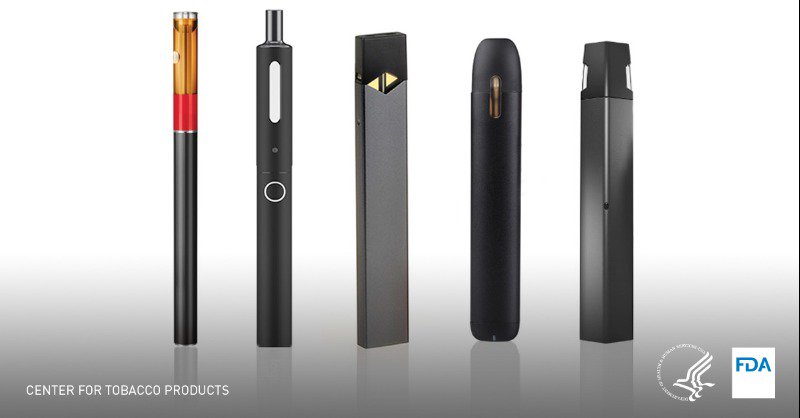
Although FDA’s recent announcement refers simply to the “e-cigarette market”, the vapor industry is actually very diverse and complex. Closed-system and cartridge-based e-cigarettes (like JUUL), the adolescent use of which FDA has made clear is its primary public health concern, is only a portion of the overall U.S. vapor products market, along with open-system vapor products (e.g., tanks, mods, e-liquids, etc.).

Indeed, FDA has been focusing on youth-use of cartridge-based e-cigarettes, and JUUL in particular, for several months, as stories about rampant teenage use have been heavily reported in the media, and the focus of Congressional inquiries.

Back on April 24, 2018, FDA announced its first set of 40 warning letters to retailers for underage sales of JUUL e-cigarettes and that it was examining the youth appeal of these products in an effort to end their sale to minors.  FDA used its authority under Section 904(b) of the Family Smoking Prevention and Tobacco Control Act (TCA) to request JUUL Labs submit information regarding its marketing and research studies, and any other information it had on how certain product features might appeal to different age groups.  Subsequently, in May 2018 FDA sent a second set of requests to several manufacturers seeking information on their JUUL-like products, including information on product marketing and design (as it may relate to the appeal or addictive potential for youth and youth-related adverse experiences), and consumer complaints, among other things.[3]

FDA has now announced that it is targeting five national brands that dominate the closed-system e-cigarette market –  JUUL and four other cartridge-based e-cigarettes, all of which are marketed by large tobacco companies: Vuse (Reynolds American), MarkTen XL (Altria), blu e-cigs (Fontem Ventures), and Logic (Japan Tobacco International, USA).  Importantly, Gottlieb indicated that these specific e-cigarettes make up “the majority of products sold to minors,” while noting that “the biggest youth use seems to be among cartridge-based e-cigarettes, and not open-tank vaping products.” (Emphasis added.)

The Agency has requested these five manufacturers submit within 60 days detailed plans describing how they will address and mitigate widespread youth use of their products.  For example, the FDA stated that such a plan may include:

  • Discontinuing sales to retail establishments that have been subject to an FDA civil monetary penalty for sale of tobacco products to minors within the prior 12 months;
  • Developing or strengthening any internal program in place to check on retailers, and reporting to FDA the name and address of retailers that have sold products to minors;
  • Eliminating online sales, whether through Internet storefronts controlled by the company or other retailers, or providing evidence to demonstrate that the company’s online sales practices do not contribute to youth use of e-cigarette products;
  • Revising current marketing practices to help prevent use by minors; and
  • Removing flavored products from the market until those products can be reviewed by FDA as part of a PMTA.

The requests that the companies eliminate all online sales and remove flavored products from the market are extremely onerous and effectively require the companies to cease sales of legal products.  FDA further noted that these actions are only examples of things the manufacturers might do to demonstrate FDA should continue to defer enforcement of the premarket review requirement with respect to their products, as discussed below, and encouraged the companies to “provide additional youth use prevention tools” for the Agency’s consideration.

Warning Letters to E-Liquid Manufacturers

Beyond illegal underage sales at the retail level, open-system vapor products have not been free from FDA scrutiny.  In May 2018, FDA and the Federal Trade Commission (FTC) issued 17 warning letters to e-liquid manufacturers for marketing products the agencies claimed were both misbranded under Sections 903(a)(1) and 903(a)(7) of the FDCA and false and misleading under Section 5 of the FTC Act, for being packaged and/or labeled in a manner that imitated “kid-friendly” foods such as apple juice, candy, whipped cream and cereal.  On August 23, 2018, FDA announced that all 17 companies that were warned have cooperated and have ceased all sales of the offending products.  FDA has now issued 12 additional warning letters to retailers for continuing to sell those e-liquids, making clear that any existing inventory of the misbranded products must be removed from commerce.

Drastic Action by FDA Could Destroy the Vapor Industry

a. Premarket Compliance Policy

Commissioner Gottlieb has made clear that the recent increase in youth use may force FDA to revisit its premarket review compliance policy, pursuant to which manufacturers of deemed noncombustible tobacco products (such as vapor products) that were on the market as of August 8, 2016, when the Deeming Rule went into effect, have until August 8, 2022 to submit PMTAs, and can remain on the market through that date.[4]  Moreover, under this compliance policy, if an application is timely submitted and accepted for scientific review, the subject product is permitted to remain on the market pending FDA review.  This compliance policy was first announced in July 2017 as part of the Agency’s comprehensive plan for tobacco and nicotine regulation, and extended the original compliance policy in the Deeming Rule, which only gave e-cigarette manufacturers until August 8, 2018 to submit PMTAs for their existing products.[5]

As noted, FDA’s letter to JUUL and the other large manufacturers indicates that it is seriously reconsidering its compliance policy, at least for cartridge-based e-cigarettes, due to widespread youth use (emphasis added):

To fulfill our public health mandate to address youth addiction to nicotine, FDA is reconsidering its compliance policy for submission of PMTAs for [the JUUL e-cigarette] and other similar products that were illegally sold by retailers during this blitz, including whether earlier enforcement of the premarket review provision might be warranted.

FDA further noted it is “seriously considering a policy change that would lead to the immediate removal of these flavored products from the market.”

Critically, Commissioner Gottlieb stated that if the five companies referenced above do not submit plans to combat youth use of their products, or if those plans are insufficient to address the problem, the companies “face a potential decision by FDA to reconsider extending the compliance dates for submission of premarket applications.”

If FDA does decide to modify the compliance policy for cartridge-based e-cigarettes because of their apparent unique impact on youth compared to other types of vapor products, such action does have precedent.  In its comprehensive plan, for example, FDA required deemed combustible products, such as cigars and hookah, on the market as of August 8, 2016 to submit premarket review applications by August 8, 2021, because of the known-health risks of combustible tobacco.

However, open-system vapor product manufacturers should be aware that Gottlieb did note in his statement that FDA’s “policy reconsiderations apply to the entire category” and that FDA is “also re-examining the enforcement discretion we currently exercise for other e-cig products currently on the market without authorization.”

While it remains unclear what, if anything, FDA might do with respect to its current compliance policy, any move to shorten the PMTA grace period for the vapor industry at-large will have devastating consequences not only for thousands of small businesses that would effectively be banned, but also for the public health.  These impacts were recently summarized in an amicus brief submitted by the Right to be Smoke-Free Coalition in the federal lawsuit filed by the public health groups challenging FDA’s compliance policy.  You can read about that lawsuit and the amicus brief, which makes clear that the vapor industry needs at least until August 2022 to prepare applications given the need for long-term clinical data, on our previous blog post here.

b. Flavored Products

Also of concern for the vapor industry is the potential targeting of flavored products, which the industry has argued are, in fact, appropriate for the protection of the public health (see here). It is important to first recognize that there is no such thing as an unflavored e-cigarette or vapor product. Unlike combustible cigarettes or other tobacco-containing products, there is simply no “natural” tobacco or other flavors inherent to e-liquids.  Rather, all flavors for these products are chemically synthesized and added to the base propylene glycol/vegetable glycerin solution.  Thus, unlike cigarettes, a ban on characterizing flavors would effectively result in a ban of all vapor products.

Moreover, numerous published studies demonstrate, and FDA has acknowledged, that flavored vapor products and e-liquids can help adult smokers reduce their cigarette use and/or switch completely to vapor products.  For example, a recently-released survey of almost 70,000 U.S. vapers found that 87.3% of respondents who quit smoking with e-cigarettes said that flavors were “extremely” or “very” important to their quit attempts.[6]

Remaining Compliant in a Rapidly Changing Regulatory Landscape

The new FDA enforcement actions and broader threats against the industry raise the possibility of dramatically altering the regulatory landscape for e-cigarettes and other vapor products.  FDA’s September 12 letters to the large manufacturers of cartridge-based e-cigarettes threaten to potentially end the premarket review compliance policy for those types of products, but it is not clear if FDA would extend this to all vapor product manufacturers.  Indeed, the stock market appears to have recognized this possibility, as legacy tobacco stocks rallied after FDA’s announcement.  Apparently, the markets have concluded that if adults are not going to be permitted to vape, they could return to traditional combustible tobacco cigarettes – the most harmful nicotine delivery system.  From our vantage point, and to the detriment of public health, it is hard to argue with this conclusion.

Accordingly, in view of FDA’s enforcement blitz and the Agency’s current focus on manufacturer advertising, marketing, and manufacturing practices, we recommend vapor product companies:

  • Start preparing premarket applications (including PMTAs) sooner rather than later (and attend FDA’s public hearing on October 22-23, 2018).
  • Work with retailers (both brick-and-mortar and online) that have age and photo-ID verification procedures that comply with requirements applicable to tobacco retailers, including requirements that:
    • the retailer checks the photo ID of everyone under age 27 who attempts to purchase any tobacco product;
    • the retailer only sells tobacco products to customers age 18 or older (consider whether age-gating may be appropriate for online retailers); and
    • the retailer does not sell tobacco products in vending machines unless in an adult-only facility.
  • Work with legal counsel to ensure that your product labeling and marketing would not cause the product to be misbranded or misleading (i.e., by imitating potentially “kid-appealing” foods).
  • Make sure your advertising and product labeling fully comply with the nicotine addiction warning (and other labeling requirements).
  • Comply with TCA requirements, including registration and listing for U.S. establishments, ingredient listing, and health document disclosures.
  • Do not introduce new products after August 8, 2016 without receiving FDA premarket authorization.
  • Comply with all sales and marketing restrictions, including use of any modified risk claims and the ban on free samples.
  • Prepare to be inspected by FDA and other authorities (sign up for our audit and inspection program here).
  • Consider developing an internal audit program to evaluate the procedures used by retail partners to avoid youth-access to your products.

If you have any questions about FDA’s announcements contact Azim Chowdhury (202.434.4230, chowdhury@khlaw.com). For more information on our Tobacco and E-vapor Practice in general, visit www.khlaw.com/evapor. Follow Keller and Heckman Tobacco and E-Vapor Partner Azim Chowdhury on Twitter.

[1]              See U.S. Food & Drug Admin., FDA News Release, FDA Takes New Steps to Address Epidemic of Youth E-Cigarette Use, Including a Historic Action Against More Than 1,300 Retailers and 5 Major Manufacturers for Their Roles Perpetuating Youth Access (Sept. 12, 2018).

[2]              Christopher Groskopf, What Yelp Data Reveal About the Sudden Rise of Vape Shops in America, Quartz, (Feb. 10, 2016), https://qz.com/608469/what-yelp-data-tells-us-about-vaping/.

[3]              The first set of letters were sent on May 17, 2018 to J Well, of Paris, France, for Bo Starter Kit; YGT Investment LLC and 7 Daze LLC, of Baldwin Park, California, for Zoor Kit; Liquid Filling Solutions LLC, of King of Prussia, Pennsylvania, for Myle Products; and SVR Inc., of Las Vegas, for SMPO Kit. Subsequently, in late May additional letters were sent to Myle Vape Inc. regarding Myle Products, and to MMS ECVD LLC regarding the Bo Starter Kit, to reflect additional relevant companies in the manufacturing and distribution chain.

[4]           Guidance for Industry: Extension of Certain Tobacco Product Compliance Deadlines Related to the Final Deeming Rule (Revised) (August 2017), available at: https://www.fda.gov/downloads/TobaccoProducts/Labeling/RulesRegulationsGuidance/UCM557716.pdf.

[5]              The original Deeming Rule compliance policy also had a sunset period that only permitted manufacturers who submitted timely PMTAs to continue to market those products for an additional year, i.e., until August 8, 2019. Unless an application was authorized during that year, it would have to be removed from the market at that time, and could only be re-introduced if it received FDA authorization.

[6]              Konstantinos F., M.D., MPH, et al., Patterns of flavored e-cigarette use among adult vapers in the United States: an internet survey (2018), at 6, 20.

On September 6, 2018, a coalition of vapor industry trade associations and businesses – specifically the Smoke-Free Alternatives Trade Association (SFATA), the American E-Liquid Manufacturing Standards Association (AEMSA), the American Vapor Association (AVA), and SV3, LLC (collectively, the “Vapor Coalition”) – submitted comments to the U.S. Trade Representative (USTR) arguing against the Trump Administration’s additional proposed tariffs that would apply to certain vapor products imported from China (see Docket No. USTR-2018-0026).

The Vapor Coalition’s comments strenuously oppose the tariffs, and describe in detail the potentially disastrous economic and public health consequences that would result if the tariffs are imposed.  The comment also describes how FDA’s current regulatory framework makes it effectively impossible for American companies to now start manufacturing vapor devices domestically – forcing U.S. businesses to rely on Chinese manufactured products.

At issue in this docket is the “Third Tranche” of tariffs proposed by the Trump Administration which apply to a number of Harmonized Tariff Schedule (HTS) codes used to import a variety of vapor products and components, parts and accessories from China:

HTS Code Product Description
8543.90.88.50 Personal electric or electronic vaporizing devices with substances containing nicotine.
8543.90.88.60 Other personal electric or electronic vaporizing devices.
2403.19.20.20 Mixture containing tobacco mixed with glycerol or other ingredients
2905.31.00.00 Ethylene Glycol (without nicotine or flavoring added)
2905.32.00.00 Propylene Glycol (without nicotine or flavoring added)
3824.99.92.80 Mixtures of a kind containing nicotine used in personal electric or electronic vaporizing devices
3923.30.00.00 Carboys, bottles, flasks and similar articles for the conveyance or packing of goods, of plastics.
8504.40.95.80 USB Charger
4202.92.00.00 Product with outer surface of sheeting of plastics or of textile materials
4819.20.00.00 Folding cartons, boxes and cases of non-corrugated paper or paperboard.
4821.10.00.00 Printed paper and paperboard labels of all kinds
8506.10.00 Manganese dioxide primary cells and primary batteries
8506.30.10 Mercuric oxide primary cells and primary batteries having an external volume not exceeding 300 cubic cm.
8506.80.00 Primary cells and primary batteries, nesoi.
8507.40.80 Nickel-iron storage batteries, other than of a kind used as the primary source of power for electric vehicles.
8507.50.00 Nickel-metal hydride batteries.

The USTR has already imposed tariffs on vapor products imported under HTS subheading 8543.70.99 including, in particular, 8543.70.99.30, 8543.70.99.40, and 8543.70.99.90 (Final Second Tranche, August 7, 2018).[1]  Although not the subject of this docket, the Vapor Coalition noted its opposition to such action and urged the USTR to reconsider and remove these subheadings from its Final Second Tranche.

You can download the Vapor Coalition’s comments to the USTR here.

________________________________________

[1] See USTR Finalizes Second Tranche of Tariffs on Chinese Products in Response to China’s Unfair Trade Practices, available at: https://ustr.gov/about-us/policy-offices/press-office/press-releases/2018/august/ustr-finalizes-second-tranche.

Today, August 10, 2018, is the compliance date for the health warnings contained in the FDA’s Deeming Rule and codified in 21 C.F.R. Part 1143.  In particular, as of today, roll-your-own (RYO) tobacco, cigarette tobacco, or covered tobacco products (except cigars and pipe tobacco) such as e-liquids that contain tobacco-derived nicotine manufactured, packaged, sold, offered for sale, distributed, or imported for sale or distribution within the United States must bear the required warning statement (i.e., “WARNING: This product contains nicotine.  Nicotine is an addictive chemical.”) on the package label, per 21 C.F.R. § 1143.3(a)(1).  This warning statement requirement also applies to advertising (including websites and social media) for RYO tobacco, cigarette tobacco, and covered tobacco products (except cigars and pipe tobacco).

The warning statement must also comply with certain requirements, with respect to font, text, size, placement, and formatting of the warning statement on the package labels.  Indeed, the regulation requires that the required warning statement “appear directly on the package” and “be clearly visible underneath any cellophane or other clear wrapping as follows”:

  • Be located in a conspicuous and prominent place on the two “principal display panels” of the package;
  • Comprise at least 30 percent of each of the principal display panels;
  • Be printed in at least 12-point font size and must occupy the greatest possible proportion of the warning label area set aside for the required text;
  • Be printed in conspicuous and legible Helvetica bold or Arial bold type or other similar sans serif fonts and in black text on a white background or white text on a black background in a manner that contrasts by typography, layout, or color, with all other printed material on the package;
  • Be capitalized and punctuated as indicated in 21 CFR § 1143.3(a)(1); and
  • Be centered in the warning area in which the text is required to be printed and positioned such that the text of the required warning statement and the other information on the principal display panels have the same orientation.[1]

For covered tobacco products (other than cigars), cigarette tobacco products, and RYO tobacco products that are too small or otherwise unable to accommodate a label with sufficient space to bear the required warning statement, the required warning statement must appear on one of the following: carton, outer container, wrapper, or tag firmly and permanently affixed to the tobacco product package.

Compliance Policy and Safe Harbor for Retailers

FDA created a compliance policy for the 21 C.F.R. § 1143.3 nicotine addiction warning in its Guidance Document, Extension of Certain Tobacco Product Compliance Deadlines Related to the Final Deeming Rule, which provides (on page 5):


The Deeming Rule also contains a retailer safe harbor, which provides that a retailer of cigarette tobacco, RYO tobacco, or covered tobacco products (other than cigars) will not be in violation of 21 C.F.R. § 1143.3 for packaging that: (i) contains a health warning; (ii) is supplied to the retailer by the tobacco product manufacturer, importer, or distributor, who has the required state, local, or Alcohol and Tobacco Tax and Trade Bureau (TTB)-issued license or permit, if applicable; and (iii) is not altered by the retailer in a material way.[2]

If you have questions about the compliance policy or the retailer safe harbor, please let us know.

Alternative Required Warning Statement for Zero Nicotine Products

For products that do not contain nicotine, but that are made or derived from tobacco, a tobacco product manufacturer is permitted to display an alternative statement (i.e., “This product is made from tobacco”) on all packages and advertisements in accordance with the requirements of 21 C.F.R. § 1143.3.  An example of such a product would be a zero-nicotine e-liquid that contains tobacco-derived flavors or extracts.  To be permitted to make such a statement, manufacturers are required to submit a confirmation statement to FDA certifying to be true that the product does not contain nicotine and that the tobacco product manufacturer has data to support that assertion.[3] If you would like to submit such a self-certification to FDA, let us know.

A zero-nicotine e-liquid that does not contain any other tobacco-derived ingredients is not a covered tobacco product subject to either the nicotine addiction warning or alternative statement.

Effect of Injunction in Cigar Association of America v. FDA

Importantly, due to a recent decision by the United States District Court for the District of Columbia, the warnings set forth in 21 C.F.R. §§ 1143.3 and 1143.5 are not applicable to cigars and pipe tobacco until 60 days after final disposition of the plaintiffs’ appeal of the courts’ order on the health warning requirements.[4]   FDA has stated that the Agency intends to comply with the court’s order in Cigar Association of America.[5]  Further, FDA explained that the Agency does not intend to enforce the labeling requirements under sections 903(a)(2) (i.e., requirement that label contain the name and place of business of the tobacco product manufacturer, packer, or distributor; an accurate statement of the quantity of contents in terms of weight, measure, or numerical count; and an accurate statement of the percentage of domestically grown vs. foreign grown tobacco) and 920(a)(1) (i.e., requirement to bear “Sale only allowed in the United States” statement) for cigars and pipe tobacco while the injunction is in effect so that firms are able to make required label changes at one time.[6]

Notably, the court’s order does not enjoin FDA from enforcing the health warning requirements for other product categories, including electronic nicotine delivery systems (ENDS) products, hookah tobacco, and cigarette tobacco and RYO tobacco.

Other Labeling Requirements

The Deeming Rule also imposed additional labeling requirements on newly deemed products. For example, tobacco products deemed under the Deeming Rule to be subject to FDA’s authority, if in package form, are required to bear a label containing:

  • the name and place of business of the tobacco product manufacturer, packer, or distributor;
  • an accurate statement of the quantity of the contents in terms of weight, measure, or numerical count; and
  • the statement “Sale only allowed in the United States” on labels, packaging, and shipping containers pursuant to Section 920(a) of the Federal Food, Drug, and Cosmetic Act (FDCA).

In addition, pursuant to Section 903(a)(2)(C) of the FDCA, a tobacco product in package form is misbranded if its label does not include an accurate statement of the percentage of foreign and domestic grown tobacco used in the product.  However, in a draft guidance document entitled, “Interpretation of and Compliance Policy for Certain Label Requirement; Applicability of Certain Federal Food, Drug, and Cosmetic Act Requirements to Vape Shops,” FDA stated that, at this time, it does not intend to enforce this requirement for products made or derived from tobacco, such as tobacco-derived liquid nicotine and e-liquid made or derived from tobacco.[7]  FDA explained that it provided this compliance policy “because it recognizes the current difficulty, in many circumstances, qualifying the percentage of foreign and domestic grown tobacco used in these products.”[8]

If you have any questions about warning requirements for product labels and advertisements or any of the other Tobacco and Control Act requirements, contact Azim Chowdhury, Partner (202) 434.4230, (chowdhury@khlaw.com).  For more information on our Tobacco and E-Vapor Practice in general, visit www.khlaw.com/evapor. You can also follow Azim Chowdhury on Twitter for updates.

[1] 21 C.F.R. § 1143.3(a)(2).

[2] 21 C.F.R. § 1143.3(a)(3).

[3] 21 C.F.R. § 1143.3(c).

[4] See Order, Cigar Ass’n of Am. v. U.S. Food & Drug Admin., No. 1:16-cv-01460 (D.D.C. July 5, 2018).

[5] See FDA, “Covered” Tobacco products and Roll-Your-Own Cigarette Tobacco Labeling and Warning Statement Requirements, https://www.fda.gov/TobaccoProducts/Labeling/Labeling/ucm524470.htm?utm_source=CTPTwitter&utm_medium=social&utm_campaign=ctp-warninglabel.

[6] See Deeming Tobacco Products to be Subject to the Federal Food, Drug, and Cosmetic Act, as Amended by the Family Smoking Prevention and tobacco Control Act; Restrictions on the Sale and Distribution of Tobacco Products and Required Warning Statements for Tobacco Products, 81 Fed. Reg. 28974, 29006 (noting that the compliance date for the 903(a)(2) and 920(a)91) requirements is intended to match the date for health warnings).

[7] FDA, Draft Guidance for Industry: Interpretation of and Compliance Policy for Certain Label Requirement; Applicability of Certain Federal Food, Drug, and Cosmetic Act Requirements to Vape Shops (Jan. 2017), https://www.fda.gov/downloads/TobaccoProducts/Labeling/RulesRegulationsGuidance/UCM536997.pdf .

[8] Id., at 5-6.

In FDA’s latest effort to implement its comprehensive plan for tobacco and nicotine regulation, the Agency published two additional advanced notice of proposed rulemakings (ANPRMs) concerning regulation of premium cigars and tobacco product flavors.  Specifically, on March 21, 2018, the FDA published an ANPRM, “Regulation of Flavors in Tobacco Products,” which solicited comments on, among things, the role of flavors (other than tobacco) (hereinafter, “flavors”) on initiation and patterns of tobacco product use and on transitioning combustible to non-combustible tobacco product use.[1]  The next week, on March 26, 2018, the FDA published another ANPRM, “Regulation of Premium Cigars,” which requested input on the definition and use patterns of premium cigars as well as public health considerations associated with premium cigars.[2]  While these regulatory actions were initially promised in FDA’s July 28, 2017 comprehensive plan for tobacco and nicotine regulation, publication of the ANPRMs in the Federal Register provide an indication of the Agency’s regulatory priorities going forward. [3]

Flavored Tobacco Products ANPRM

In the ANPRM regarding regulation of tobacco product flavors, FDA requests comments on, among other topics, the following:

  • The Role of Flavors (other than tobacco) in Tobacco Products: FDA requested studies or information regarding the role of flavors generally in tobacco products, as well as the appropriateness of extrapolating research from other areas (e.g., consumer products) to the tobacco space.[4]
  • Flavors (other than tobacco) and Initiation and Patterns of Tobacco Product Use, Particularly Among Youth and Young Adults: FDA requested studies or information regarding the role of flavors in: (1) initiation and/or patterns of use of combusted and non-combusted tobacco products among youth and young adults; (2) in non-combusted tobacco products on initiation of tobacco product use or progression to use of other tobacco products among youth and young adults.[5]
  • Flavors (other than tobacco) and cessation, dual use, and relapse among current and former tobacco product users: FDA requested information on the role of flavors in helping adult cigarette smokers reduce cigarette use and/or switch to potentially less harmful tobacco products. Further, FDA requested studies or information concerning the role of flavors in non-combusted tobacco products on the likelihood of: (i) cessation of combusted tobacco product use; (ii) cessation of all tobacco product use; and (iii) uptake of dual use of combusted and non-combusted tobacco products among current and former tobacco product users.”[6]  FDA also requested information on the role of flavors in combusted products on the likelihood of: (1) delayed or impeded cessation among users who would have otherwise quit combusted tobacco product use; or (2) delayed or impeded cessation among users who would have otherwise quit all tobacco product use.  FDA also solicited studies or information regarding the role of flavors in non-combusted tobacco on the likelihood that former combusted tobacco product users relapse.[7]
  • Additional Public Health Considerations: FDA requested studies or information regarding (1) the potential toxicity or adverse health effects to the user or others from any flavors (e.g., flavor additives, compounds or ingredients) in tobacco products; (2) the impact of public health efforts by local jurisdictions, States, and members of the international community to impose restrictions on the manufacture, marketing, sale or distribution of all or a subset of tobacco products with flavors, including but not limited to, cigars, ENDS, menthol cigarettes, and smokeless tobacco products; (3) consumer perceptions of the health risk of tobacco products with flavors when compared to other tobacco products both with and without flavors; (4) consumer perceptions, if any, of the addictiveness of tobacco products with flavors.

In a contemporaneous statement accompanying the ANPRM, FDA Commissioner Scott Gottlieb, M.D called upon all stakeholders to “share data, research, and information that can inform our process for examining the role that flavors – including menthol – play in initiation, use and cessation of tobacco products.[1]  Importantly, the FDA Commissioner also requested “personal stories” from individuals that have been aided by flavors in making the transition between combustible tobacco cigarettes and vaping.  As seen in the litigation surrounding the deeming rule, these regulatory comments could be cited in any future litigation regarding either of these issues.

Comments are due on the tobacco product flavors ANPRM by June 19, 2018.

Premium Cigars ANPRM

In the preamble to the ANPRM regarding premium cigars, FDA noted that it received “numerous comments on the deeming proposed rule with respect to premium cigars, both in favor of, and against, regulating these products.”[8]  However, FDA explains that there was a lack of data supporting the opinions expressed in the comments received by the Agency regarding the Deeming Rule.  For that reason, the ANPRM explains that “FDA is seeking comments, evidence, information, data, and analysis that were not submitted in response to the proposed deeming rule” that could inform FDA’s thinking with respect to regulation of premium cigars.[9]

As an example of the type of information that would be responsive to the ANPRM, FDA cites a PATH Study Paper, which analyzed findings from the 2013-2014 Population Assessment of Tobacco and Health (PATH) Study with a focus on smokers of filtered cigars, cigarillos, and traditional cigars, which were further classified by study authors as either “premium” or “nonpremium.”[10]  That study concluded that “use characteristics, cigar smoking patterns, and dual smoking with cigarettes varied by cigar type.”[11]

Specifically, in the ANPRM, FDA requests comments on, among other topics, the following:

  • Definition of Premium Cigars: Among other things, FDA requested comments from the public concerning the defining characteristics of premium cigars, which may include: size; tobacco filler type; fermentation type; wrapper and binder composition; where the tobacco used for premium cigar filler or wrappers is grown; presence or absence of a filter or mouthpiece; manufacturing and assembly process; rate of production; presence or absence of flavor imparting compounds, flavor additives, or characterizing flavors other than tobacco; presence or absence of any additives other than cigar glue; nicotine content; tar and carbon monoxide delivery amounts; retail price; frequency with which price changes; packaging quantity and size; any action directed to consumers by a retailer or manufacturer.[12]
  • Use Patterns of Premium Cigars: FDA solicited studies or information regarding, among other things, and as compared to other cigars: (1) the potential role of premium cigars on tobacco initiation and progression to use of other tobacco products; (2) behavioral data related to dual use of premium cigars and other tobacco products; (3) the frequency and intensity of premium cigar use; (4) the proportion of premium cigar smokers showing symptoms of dependence; (5) the abuse liability of premium cigars; (6) the impact of premium cigar labeling, advertising, and marketing efforts on patterns of use.  Lastly, FDA also requested information on the extent to which users of other tobacco products might switch to premium cigars if FDA were to exempt premium cigars from regulation or regulate premium cigars differently from other cigars.[13]
  • Public health considerations associated with premium cigars: FDA requested studies or information regarding, among other things, and as compared to other cigars: (1) nicotine concentrations for premium cigars; (2) the risk of cancer, heart disease, aortic aneurysm, periodontal disease, stroke, and chronic obstructive pulmonary disease associated with premium cigar use; (3) the addictiveness, and consumer perceptions of the addictiveness, of premium cigars; (4) the required warning statements for premium cigars; and (5) the applicable manufacturing, marketing, sale, distribution, advertising, and labeling and/or packaging requirements and restrictions in the FDCA and its implementing regulations and whether they should be applied differently to premium cigars.

Comments are due on the premium cigar ANPRM by June 25, 2018.

Summary

An Advanced Notice of Proposed Rulemaking constitutes the earliest (and optional) stage of the administrative process that must be followed before eventually issuing an administrative rule.  As such, there is still ample time for efforts to influence the FDA’s regulatory approach to both premium cigars and tobacco product flavors by submitting comments to the administrative docket.  Companies or individuals interested in providing such feedback should consult with counsel to determine the best approach to maximize their impact with FDA.

[1]              See FDA, Statement from FDA Commissioner Scott Gottlieb, M.D., on Efforts to Reduce Tobacco Use, Especially Among Youth, by Exploring Options to Address the Role of Flavors – including Menthol – in Tobacco Products, https://www.fda.gov/NewsEvents/Newsroom/PressAnnouncements/UCM601690.htm?utm_source=CTPEblast&utm_medium=email&utm_term=sro&utm_content=pressrelease&utm_campaign=ctp-flavanprm.

[1]              Regulation of Flavors in Tobacco Products, 83 Fed. Reg. 12294 (Mar. 21, 2018);

[2]              Regulation of Premium Cigars, 83 Fed. Reg. 12901 (Mar. 26, 2018).

[3]              FDA News Release, FDA Announces Comprehensive Regulatory Plan to Shift Trajectory of tobacco-related disease and death (July 28, 2017), https://www.fda.gov/NewsEvents/Newsroom/PressAnnouncements/ucm568923.htm.

[4]              83 Fed. Reg. 12994, 12998-99 (Mar. 21, 2018).

[5]              83 Fed. Reg. 12999.

[6]              Id.

[7]              Id.

[8]              83 Fed. Reg. 12901, 12902 (Mar. 26, 2018).

[9]              83 Fed. Reg. 12902. (emphasis added).

[10]             83 Fed. Reg. 12902-03, citing, Catherine G. Corey, MPSH et al., U.S. Adult Cigar Smoking patterns, Purchasing Behaviors, and Reasons for Use According to Cigar Type: Findings from the Population Assessment of Tobacco and Health (PATH) study, 2013-2014, Nicotine & Tobacco Research (Sept. 15, 2017), available at https://academic.oup.com/ntr/advance-article-abstract/doi/10.1093/ntr/ntx209/4159211?redirectedFrom=fulltext.

[11]             Catherine G. Corey, MPSH et al., U.S. Adult Cigar Smoking patterns, Purchasing Behaviors, and Reasons for Use According to Cigar Type: Findings from the Population Assessment of Tobacco and Health (PATH) study, 2013-2014, Nicotine & Tobacco Research (Sept. 15, 2017), available at https://academic.oup.com/ntr/advance-article-abstract/doi/10.1093/ntr/ntx209/4159211?redirectedFrom=fulltext.

[12]             83 Fed. Reg. 12903.

[13]             83 Fed. Reg. 12904.

On February 2, 2018, U.S. Smokeless Tobacco Company LLC (UST), a wholly owned subsidiary of Altria Group, Inc., filed suit against the U.S. Food and Drug Administration (FDA), U.S. Department of Health and Human Services (HHS), HHS Secretary Alex Azar, and FDA Commission Scott Gottlieb in the U.S. District Court for the District of Columbia challenging FDA’s application of the Substantial Equivalence (SE) Report standard. (Case 1:18-cv-00251.) The suit follows on FDA’s recent Not Substantially Equivalent (NSE) determinations for UST’s Copenhagen Bold Wintergreen Flavor Packs (Copenhagen Bold), and the agency appeal order upholding the NSE determinations, which UST argues is arbitrary, capricious, and contrary to the Tobacco Control Act. You can download UST’s complaint here.

Pursuant to the Food, Drug and Cosmetic Act (FDCA), as amended by the Family Smoking Prevention and Tobacco Control Act (TCA), all new tobacco products must be authorized by FDA before entering the market via either the Premarket Tobacco Product Application, SE Report or SE Report Exemption pathways.[1] A “new” tobacco product is a tobacco product that was either introduced to the U.S. market after February 15, 2007 (the “grandfather date”), or, if it was already on the market as of that date, had any modifications made other than to its labeling (e.g., a change in any design, component, part, constituent, including a smoke constituent, or in the content, delivery, or form of nicotine, or any other additive or ingredient).[2]

The SE Report requires comparing the new product to a “predicate” product (e.g., a grandfathered product or a product that has already obtained SE marketing authorization). To be substantially equivalent, the new tobacco product must either (i) have the same (e.g., identical) “characteristics”[3] as the predicate tobacco product, or (ii) if it has different characteristics, the submission must demonstrate that the new product “does not raise different questions of public health”. In other words, even if the characteristics of the new and predicate products differ, FDA may still determine the new tobacco product is substantially equivalent, and thereby permit its marketing, if the differences in the characteristics do not implicate new or different public health concerns.

The Copenhagen Bold products are smokeless tobacco products that consist of mint flavored loose tobacco packaged in a mesh pouch, which is intended to be placed under the lip. The lawsuit explains that the Copenhagen Bold products contain the same loose tobacco that was marketed as loose tobacco as of February 15, 2007, and have the same packaging format (i.e., a mesh pouch) as other grandfathered UST smokeless tobacco products, but that used different loose tobacco. In other words, the specific loose tobacco and mesh pouch combination used in the new Copenhagen Bold products was not on the market as of the grandfather date.

The lawsuit centers on the legal standard for substantial equivalence under the TCA. UST argues that while the first prong of the SE definition requires a comparison between a new product and a predicate product, the second prong of the definition does not mention a predicate product, but instead requires a broader inquiry regarding the “public health” impact of the new product.

UST argues that rather than considering whether the new Copenhagen Bold products generally raise different questions of public health compared to other similar products that were on the market as of February 15, 2007, FDA’s SE review relied only on a characteristic-by-characteristic comparison of the new products to the identified predicate products. Furthermore, FDA’s NSE determination provided no explanation about how those characteristics (i.e., the mesh pouch) caused the new products to raise “different questions of public health.” FDA failed to identify what those “different questions” supposedly were.

Rather, UST claims that the use of the mesh pouch with the loose tobacco actually decreases the release of nicotine and certain carcinogens, without any increase in harmful constituents. Thus, the Copenhagen Bold products present no new health risks compared to moist smokeless products marketed as of February 15, 2007, and do not raise different questions of public health. Accordingly, in UST’s view, the new Copenhagen Bold products readily satisfy the second prong of the SE standard.

UST also takes issue with FDA’s fluctuating advice regarding predicate products. It points out that FDA has changed its position as to whether a company may rely on more than one predicate product in an SE application, and has restrictively required that a predicate product have the same “format” as the new product (e.g., requiring that a new product that is a pouch of tobacco be supported by comparison to a predicate product that also is a pouch of tobacco). UST also discusses that, through private communications during the SE review process, FDA introduced a new concept of a “surrogate product” that could be used to provide supplemental information about other legally marketed products that are like the new product, but was not a predicate product per se. Ultimately, however, the Agency did not consider information on the surrogate product, as it had indicated it would.

UST charges that, “[b]y failing to define either ‘same characteristics’ or ‘different questions of public health,’ by regulating through ad hoc decisions, punctuated with vague, inconsistent guidance documents, not to mention unreliable private advice, FDA has made the SE provisions of the TCA indecipherable to regulated entities like UST.”

In the view of UST, it is appropriate to assess the second prong of the SE standard by looking to the public health impacts of the relevant category of tobacco products as a whole on the grandfather date, and to determine whether the new product poses “different questions of public health” in type or magnitude from the known risks of the grandfathered products generally. If a comparison of new and predicate products indicates that they are the same (i.e., identical) with respect to material characteristics, the analysis should end with the first prong. Otherwise, the analysis should proceed under the second prong, and comparison should be made to the public health impact of grandfathered products falling into the same category of tobacco products as the new product, not just a comparison of the new product to a single identified predicate.

In summary, the UST suit requests the following main forms of relief:

a. Declare that the NSE orders and agency appeal order for the Copenhagen Bold products are arbitrary and capricious, not in accordance with law, all in violation of the Administrative Procedure Act and the TCA, because the orders misconstrue the SE standard;

b. Declare that the NSE orders and agency appeal order failed to give UST fair notice of the applicable SE standards, depriving UST of due process of law, in violation of the Constitution;

c. Vacate and set aside the NSE orders and the agency appeal order.

d. Remand the matter to FDA to apply the correct legal standard; and

e. Enter a permanent injunction restraining FDA from implementing or enforcing the NSE orders and agency appeal order.

The case has been assigned to Judge Emmet G. Sullivan of the District Court. He issued a standing order regarding the proceedings of the case on February 6, 2018. The government’s answer to the UST complaint has not yet been filed. We will keep updated on the progress of the lawsuit.

___________________________

[1]  21 U.S.C. § 387j(a)(1) and (2).

[2]  21 U.S.C. § 387j(a)(3)(A)(i)–(ii).

[3] Characteristics means the materials, ingredients, design, composition, heating source, or other features of the tobacco product. See FDA’s Guidance for Industry, Demonstrating the Substantial Equivalence of a New Tobacco Product: Responses to Frequently Asked Questions (Edition 3), available at https://www.fda.gov/downloads/TobaccoProducts/Labeling/RulesRegulationsGuidance/UCM436468.pdf