
Photo of Azim Chowdhury

Azim Chowdhury is a regulatory and public policy attorney with a focus on vapor, nicotine and tobacco product regulation. He is a Partner in Keller and Heckman’s nationally-ranked food and drug law practice.

Mr. Chowdhury advises domestic and foreign corporations in matters of Food and Drug Administration (FDA) and international regulatory compliance. In particular, he has developed expertise in tobacco and vapor product regulation relating to the implementation of the Family Smoking Prevention and Tobacco Control Act, and spearheaded the Tobacco and E-Vapor practice at Keller and Heckman. Specifically, Mr. Chowdhury has experience representing tobacco, e-cigarette and e-liquid manufacturers, distributors, retailers, suppliers and trade associations in matters of FDA, state and global regulatory compliance. He also assists corporations in establishing clearances for food and drug additives in the U.S., Canada, and European Union, with an emphasis on indirect additives used in food-contact materials.

Mr. Chowdhury has authored and edited numerous articles and publications, including Tobacco Regulation and Compliance: An Essential Resource, FDA Regulation of Tobacco: A Comprehensive Guide – An FDLI Primer and Tobacco and Nicotine Delivery: Regulation and Compliance, 2nd Edition. He is a frequent contributor to the Food and Drug Law Institute's (FDLI) Update Magazine and has served on the Editorial Advisory Board of the Food and Drug Law Journal.  In addition, he has been interviewed in the U.S. News and World Reports Best Lawyers Edition (2016) and was named one of “10 Names to Know in the Vape World” in the October 2015 issue of Vape Magazine. Mr. Chowdhury received the 2018 National Law Review Go-To Thought Leadership Award for his consistent coverage of the emerging issues surrounding vaping and e-cigarettes on Keller and Heckman’s law blog, The Continuum of Risk.  As an industry leader, Mr. Chowdhury frequently speaks at industry conferences and events.

Mr. Chowdhury also has an active pro bono practice through Keller and Heckman’s Pro Bono Program, and has been featured in the Baltimore Sun for successfully obtaining asylum in the United States for a family who fled their home country of El Salvador because of violence they faced from an international gang.

Prior to entering private practice, he served as a judicial law clerk on the Court of Special Appeals of Maryland. Mr. Chowdhury received a B.A. and B.S. from Johns Hopkins University, a MBA from the University of Maryland Robert H. Smith School of Business, and a JD, cum laude, from the University of Maryland School of Law.

Education: Johns Hopkins University (B.A., B.S., 2003); University of Maryland Robert H. Smith School of Business (M.B.A., 2006); University of Maryland School of Law (J.D., 2006, cum laude).

Admissions: District of Columbia; Maryland

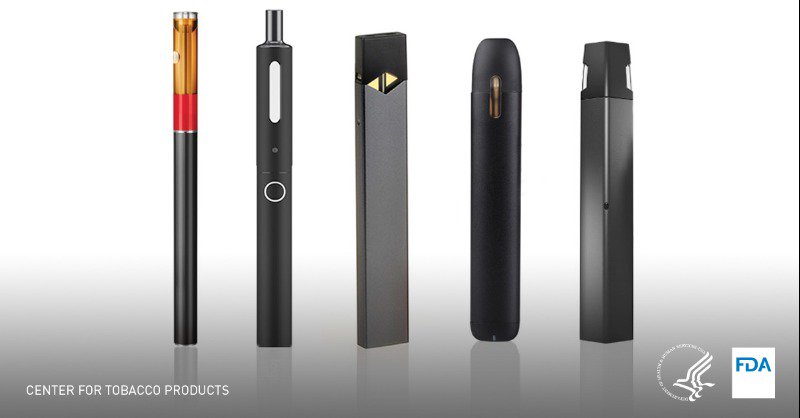
On September 12, 2018, in a self-described “blitz”, FDA announced a deluge of enforcement actions, including more than 1,300 warning letters and fines to retailers aimed at addressing youth use of e-cigarettes, which FDA asserts has reached “epidemic” proportions, based on new, not-yet-released survey data.[1]  FDA also requested manufacturers of five “national brands,” whose

On September 6, 2018, a coalition of vapor industry trade associations and businesses – specifically the Smoke-Free Alternatives Trade Association (SFATA), the American E-Liquid Manufacturing Standards Association (AEMSA), the American Vapor Association (AVA), and SV3, LLC (collectively, the “Vapor Coalition”) – submitted comments to the U.S. Trade Representative (USTR) arguing against the Trump Administration’s additional

In a widely anticipated move, FDA has significantly increased the frequency of inspections of vapor manufacturing and retail facilities over the past few weeks, with some inspections spanning two days. We have received reports from vapor businesses across the country that they are receiving unannounced visits from FDA investigators conducting biannual inspections pursuant to Sections

Defendant U.S. Food and Drug Administration (FDA) and the Right to Be Smoke-Free Coalition (RSF) recently submitted briefs to the federal district court of Maryland opposing a motion for summary judgment filed by various public health NGOs in American Academy of Pediatrics v. FDA.[1] The NGOs are challenging various extensions to premarket application

Today, August 10, 2018, is the compliance date for the health warnings contained in the FDA’s Deeming Rule and codified in 21 C.F.R. Part 1143.  In particular, as of today, roll-your-own (RYO) tobacco, cigarette tobacco, or covered tobacco products (except cigars and pipe tobacco) such as e-liquids that contain tobacco-derived nicotine manufactured, packaged, sold, offered

On August 2, 2018, just over one year since FDA announced its “Comprehensive Plan for Tobacco and Nicotine Regulation”[1] (hereinafter, the “Comprehensive Plan”), FDA Commissioner, Scott Gottlieb, M.D., and Center for Tobacco Products (CTP) Director, Mitch Zeller, J.D., authored a post on the Agency’s FDA Voice blog, which reviewed the progress made to date

On March 27, 2018, a coalition of public health organizations including the Campaign for Tobacco-Free Kids, the Truth Initiative, the American Cancer Society and the American Academy of Pediatrics, among others, as well as several individual physicians (collectively the “NGOs”) filed a lawsuit in the United States District Court for the District of Maryland challenging

On June 18, 2018, U.S. Food and Drug Administration (FDA) Commissioner Dr. Scott Gottlieb delivered remarks on “FDA’s Nicotine and Tobacco Regulation and the Key Role of Regulatory Science” at the Tobacco Regulatory Science Program Meeting.[1] While addressing the importance of regulatory science to inform FDA’s Center for Tobacco Products (CTP) regulatory efforts, Commissioner

Tobacco product manufacturing establishments in the United States must register with the Food and Drug Administration (FDA) immediately upon beginning manufacturing operations (e.g., the manufacture, preparation, compounding, or processing of a tobacco product).  As part of the registration process, establishment operators must submit a detailed list of products manufactured at the establishment, along