


On May 5, 2026, the U.S. Food and Drug Administration (FDA) issued marketing granted orders (MGOs) for four Glas closed-pod electronic nicotine delivery system (ENDS) products: Classic Menthol, Fresh Menthol, Gold (mango), and Sapphire (blueberry). The authorization is a significant development for the ENDS industry because the Gold and Sapphire are FDA’s first authorized non-tobacco, non-menthol ENDS flavors through the Premarket Tobacco Product Application (PMTA) process.
Until now, FDA-authorized ENDS products had been limited to tobacco and menthol flavors. The Glas orders indicate that FDA is willing to authorize products in other flavor categories where the application demonstrates that youth-use risk can be effectively mitigated through built-in age-gating device access restriction (DAR) technology.
Effective Age-Gating as Youth-Risk Mitigation
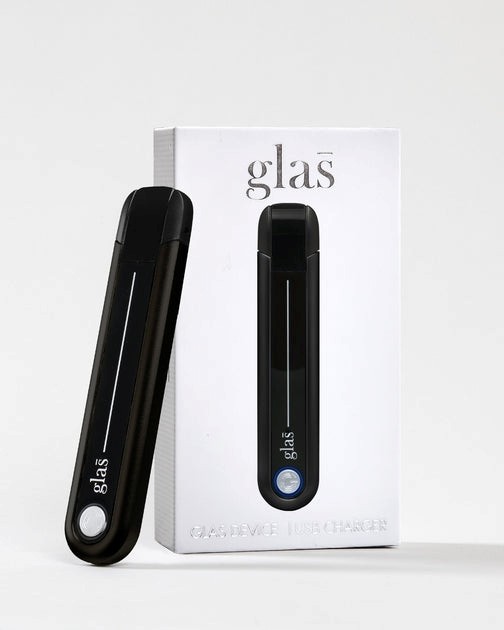
According to FDA, the Glas G2 ENDS device requires age and identity verification using a government-issued ID, pairing with a smartphone through Bluetooth, and continued device functionality tied to the verified user’s phone. FDA also noted that the app conducts random biometric check-ins to confirm that the registered user is the person using the device.
FDA found that Glas sufficiently demonstrated that its DAR technology, combined with FDA-required marketing restrictions, is expected to effectively mitigate youth use. FDA also stated that most adults aged 21 and older successfully completed age verification and found the device-use instructions and age-verification software easy to understand and activate, while youth and young adults could not complete the age-verification process or activate the product.
These orders confirm that effective age-gating through DAR technology may provide an additional pathway for demonstrating that a non-tobacco flavored ENDS product satisfies the “appropriate for the protection of the public health” (APPH) standard, including for flavor categories that FDA recently identified in draft guidance as presenting heightened youth-risk concerns. In the Glas case, FDA appears to have based the MGOs principally on the effectiveness of the products’ age-gating technology and related youth-risk mitigation controls, rather than on a traditional showing that the flavored products provided greater adult switching benefit than a tobacco-flavored comparator.
What Glas’s RCT Demonstrated
Glas’s PMTA included a three-month randomized controlled switching study that was presented at the 2025 Tobacco Science Research Conference (TSRC).1 In that study, 400 exclusive adult smokers of 10 or more cigarettes per day with no intent to quit were randomized to one of four conditions: Glas flavored pods (Gold and Sapphire), Glas menthol-flavored pods (Fresh Menthol and Classic Menthol), Glas tobacco-flavored pods (Blue, Blonde, and Signature), or FDA-authorized NJOY ACE tobacco-flavored products. According to the study’s abstract, “The primary objective for this study was to assess the APPH benefit, specifically cessation and past 30 days CPD (cigarettes smoked per day) reduction of 50% or greater after 3 months of use under the four conditions.”
The study results indicate that while all Glas conditions supported significant behavioral changes, the Glas flavored products did not demonstrate an added benefit over the Glas tobacco or Glas menthol products for either of the study’s two primary outcomes: past 30-day complete smoking cessation or substantial (i.e., >50%) CPD reduction. At three months, complete cessation was reported by 21% of participants using Glas tobacco pods and 21% using Glas menthol pods, compared to 13% for those with access to both the Glas mango (Gold) and blueberry (Sapphire) flavors. However, it is notable that all three Glas conditions achieved higher cessation rates than the tobacco-flavored market control (the FDA-authorized NJOY tobacco-flavored ACE; 11%).
Furthermore, the Glas flavored products produced a near equivalent benefit to the Glas tobacco and menthol products in facilitating substantial cigarette reduction, with 45% to 46% of participants in all Glas groups reducing their past-30-day cigarettes per day by at least 50%. Those using Glas flavors were, however, more likely than users of Glas tobacco flavors to report a 1-50% CPD reduction after three months (27% vs. 13%). Overall, these results suggest that FDA accepted a different APPH rationale for the Glas products: each of the products did benefit a meaningful proportion of adults who smoke, but given that the Glas flavors did not provide an added benefit over Glas tobacco products on either of the study’s two primary outcome measures – and indeed, Glas flavors were associated with a lower cessation benefit compared to Glas tobacco products – the decisive factor for authorizing the Glas flavors appears to have been that effective DAR technology in the device substantially reduced the youth-risk side of the APPH balance.
How This Fits With FDA’s March 2026 Draft Guidance
As discussed in our previous blog post, FDA’s March 2026 draft guidance states that flavored ENDS applications are evaluated under the APPH standard by weighing adult-smoker benefit against youth risk, and that the amount of adult benefit needed should increase or decrease as the known risks of the product increase or decrease. The draft guidance also states that FDA has generally looked for evidence that non-tobacco flavored ENDS provide added benefit over tobacco-flavored ENDS, particularly where the flavor category presents greater youth-appeal concerns.
The Glas authorizations demonstrate that if an applicant can materially reduce youth-access and youth-use risk through effective device-level age-gating, FDA may be willing to authorize a non-tobacco flavored ENDS product without requiring the same comparative efficacy showing that would ordinarily be expected for a flavored product without DAR technology. Put differently, effective age-gating (as demonstrated by robust and reliable research data) may reduce the youth risk that must otherwise be offset by added adult benefit.
At the same time, FDA did not suggest that comparative adult-benefit evidence is irrelevant. Applicants without DAR features should still expect to support APPH with robust adult-benefit evidence, including product-specific evidence that the flavored product promotes complete switching or significant cigarette reduction beyond what is achieved with tobacco-flavored ENDS. And even for applicants with DAR technology, the Glas orders should not be read to mean that adult-benefit evidence is unnecessary. Glas had adult-benefit data; the key point is that FDA appears not to have required added benefit over tobacco flavor once youth risk was effectively mitigated. In addition, it is important to note that the March 2026 draft guidance for flavored ENDS emphasizes that an applicant relying on DAR technology to address youth risk carries an especially high burden to substantiate the efficacy of those features with valid and reliable evidence from robust scientific investigations, particularly where the technology is intended to overcome the heightened concerns associated with youth-appealing flavors.
Not a Free Pass for Flavored ENDS
FDA made clear that the marketing orders apply only to the four authorized Glas products and do not apply to any other Glas products (the Glas G2 device and Blonde Tobacco 50 mg/mL pod were separately authorized on March 12, 2026). FDA also reiterated that no tobacco product is safe, that youth should never use tobacco products, and that people who do not currently use tobacco products should not start.
The orders also include significant post-authorization obligations. FDA stated that the company must ensure that advertising is carefully targeted to adults 21 and older, track and report the effectiveness of its youth-prevention measures, and provide analyses of the demographics reached by its advertising, marketing, and promotional activities. FDA also warned that it may suspend or withdraw authorization if continued marketing is no longer APPH, including if youth use increases or if evidence shows that product benefits no longer outweigh risks.
These conditions reinforce that age-gating is not merely a technology feature. For PMTA purposes, it must be part of an integrated compliance and postmarket surveillance system. Applicants seeking to rely on device access restrictions should expect FDA to scrutinize the technology itself, user verification, data privacy, human factors, cybersecurity, anti-circumvention controls, marketing restrictions, postmarket reporting, and the applicant’s ability to detect and respond to misuse.
Conclusion
FDA’s authorization of the Glas Classic Menthol, Fresh Menthol, Gold, and Sapphire pods is a landmark moment for the ENDS category. It signals that effective age-gating may provide a viable pathway for demonstrating APPH for certain flavored products, including non-tobacco, non-menthol flavors. The timing of the Glas authorization is also important. FDA issued these orders against the backdrop of youth vaping rates that, according to 2025 National Youth Tobacco Survey (NYTS) data, have fallen to the lowest level in over a decade. This is important because APPH is a balancing standard – as youth-use risk declines, the evidentiary showing needed to offset that risk should, at least in principle, decline as well.
The Glas decision does not eliminate the need for robust science. Rather, it clarifies that there may be more than one way to satisfy the APPH standard for flavored ENDS. One pathway remains the traditional adult-benefit showing: demonstrating that a flavored product helps adult smokers to quit or switch to a level that outweighs youth risk compared to tobacco flavors. The Glas pathway appears to reflect a different approach, leveraging robust device access restrictions and targeted marketing controls to substantially mitigate youth-use risk and, in turn, shift the APPH analysis in favor of authorization.
- Ed Carmines et al., Glas age-gated pod-based ENDS facilitates tobacco use behaviors that benefit adult smokers, 78th Tobacco Science Research Conference Poster #88 (2025). Accessed May 5, 2026 at: https://www.coresta.org/abstracts/glas-age-gated-pod-based-ends-facilitates-tobacco-use-behaviors-benefit-adult-smokers. ↩︎